Why Soft Plastic Lures Bend the Way They Do (and How to Tune the Action)
Understanding soft plastic lure action begins with understanding how a lure bends. Every soft bait flexes according to its material properties, geometry, thickness, and hinge design. Here’s a thing that should bother you more than it does: take the exact same plastic — same softness, same formula, same pour — and mold it into a fat stick worm, a thin-tailed grub, and a ribbed finesse worm. Drag all three through the water and they swim completely differently. Same plastic. Totally different action. So the action can’t be coming only from the material. It’s coming from the shape — specifically, from how the shape bends. And bending follows a couple of simple rules that, once you see them, let you tune a bait’s action on purpose instead of by trial and error. Let’s get into them, in plain terms.
Bending Isn’t One Thing — It’s Two Stiffnesses Multiplied
These two stiffnesses work together to determine soft plastic lure action. When people say a bait is “stiff” or “soft,” they’re usually thinking about the plastic — how it feels when you pinch it. That’s real, but it’s only half of what decides how a bait bends. There are actually two separate stiffnesses at play, and they get multiplied together:
- Material stiffness — how rigid the plastic itself is. This is set by the formula (mostly the plasticizer; more plasticizer, softer plastic). Engineers call it the modulus.
- Shape stiffness — how much the cross-section resists bending purely because of its geometry, regardless of what it’s made of. Engineers call this the second moment of area (don’t worry about the name — it just means “how the shape is arranged”).
Multiply those two together and you get the bait’s true resistance to bending, called flexural rigidity. The key word is multiplied. Shape isn’t a minor tweak on top of material — it’s an equal partner, and as you’re about to see, it’s often the bigger lever of the two. That’s the whole reason three baits made of identical plastic can swim three different ways: their shapes give them different shape-stiffness, even though the material stiffness is the same.
What’s Actually Happening Inside a Bending Tail
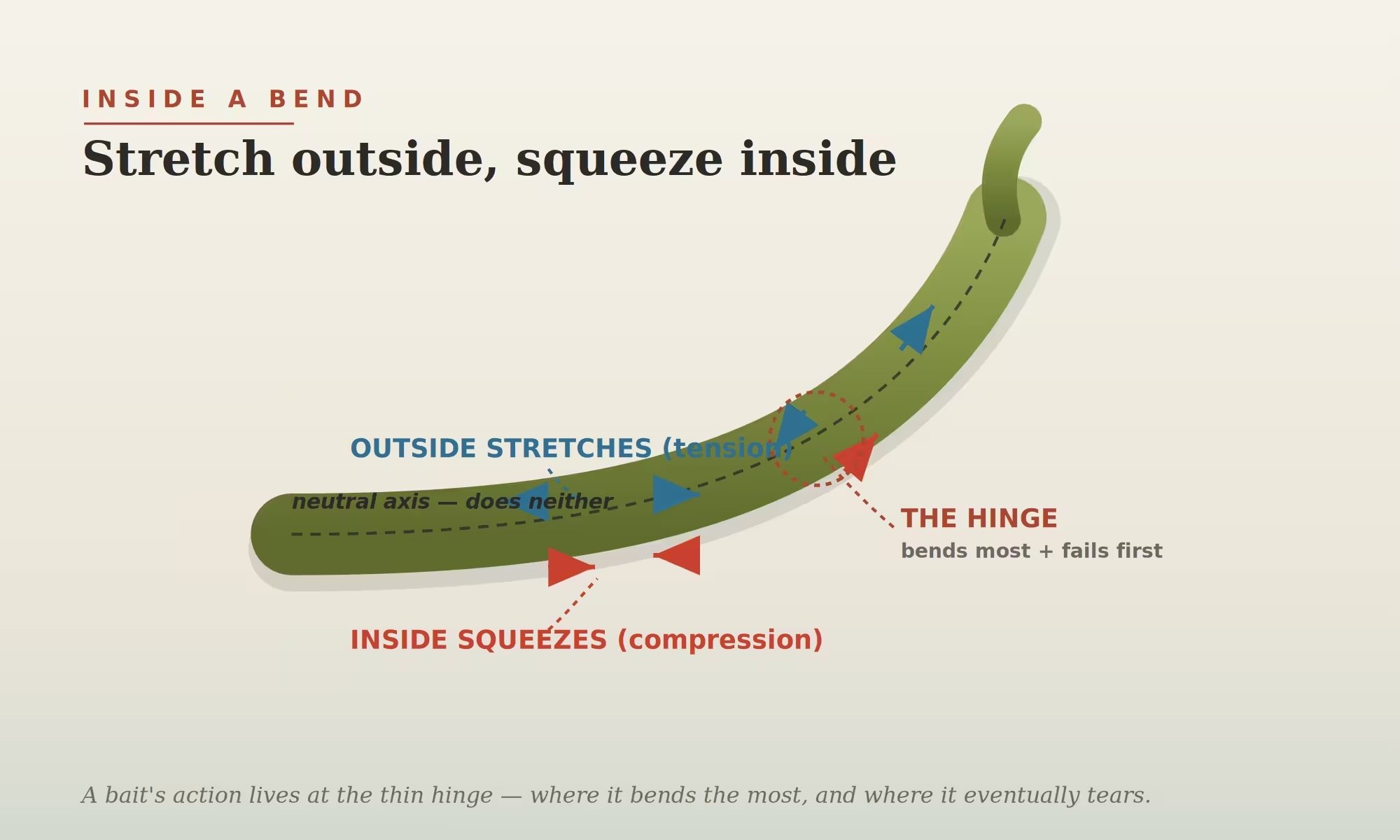
Picture a worm tail curving as you pull it through the water. It looks like the whole thing is just “bending,” but inside the plastic, three different things are happening at once:
- The outside of the curve is being stretched (tension).
- The inside of the curve is being squeezed (compression).
- Somewhere in the middle is a layer doing neither — the neutral axis.
The farther a bit of plastic sits from that neutral middle, the harder it’s being worked. The very surface — the outermost skin on the stretched side — is under the most stress of anything in the bait. The core barely feels it. This is captured in a tidy engineering relationship called the flexure formula:
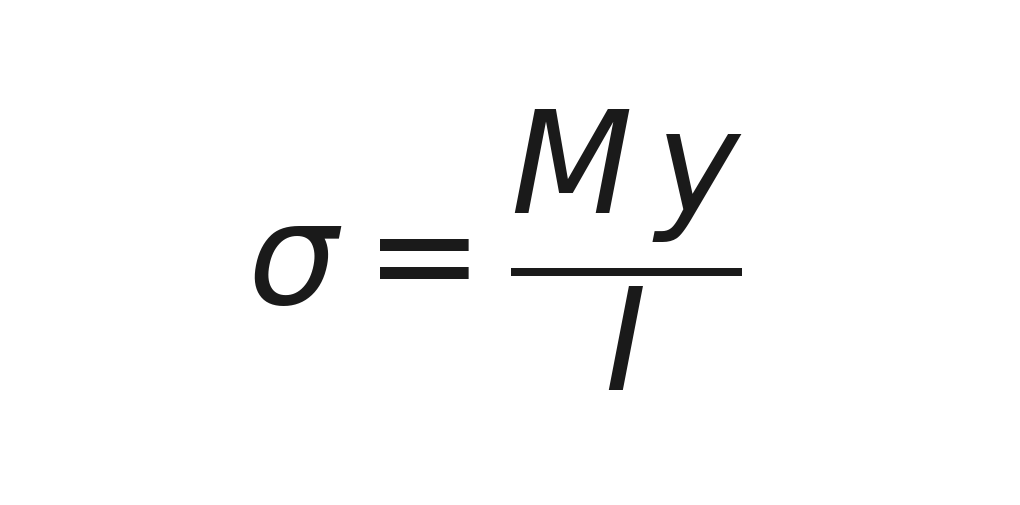
In plain language:
- σ (sigma) is the bending stress at a given spot — how hard the plastic is being stretched or squeezed there.
- M is the bending moment — basically how hard the bait is being bent (more water force, or a longer tail giving more leverage, means a bigger M).
- y is how far that spot is from the neutral middle. Bigger distance, more stress. This is why the surface of a bending tail works hardest.
- I is that shape-stiffness number — the geometry. It’s the star of the show, and it’s next.
The takeaway from the formula alone: a bending bait works its outer skin the hardest, and the geometry term I controls how much it resists in the first place.
The Rule That Explains Everything: Geometry Wins
Here’s where it gets practical, and a little wild. That shape-stiffness number, I, doesn’t grow in proportion to how thick a bait is. It grows with thickness cubed. For a flat or ribbon-shaped section, the formula is:
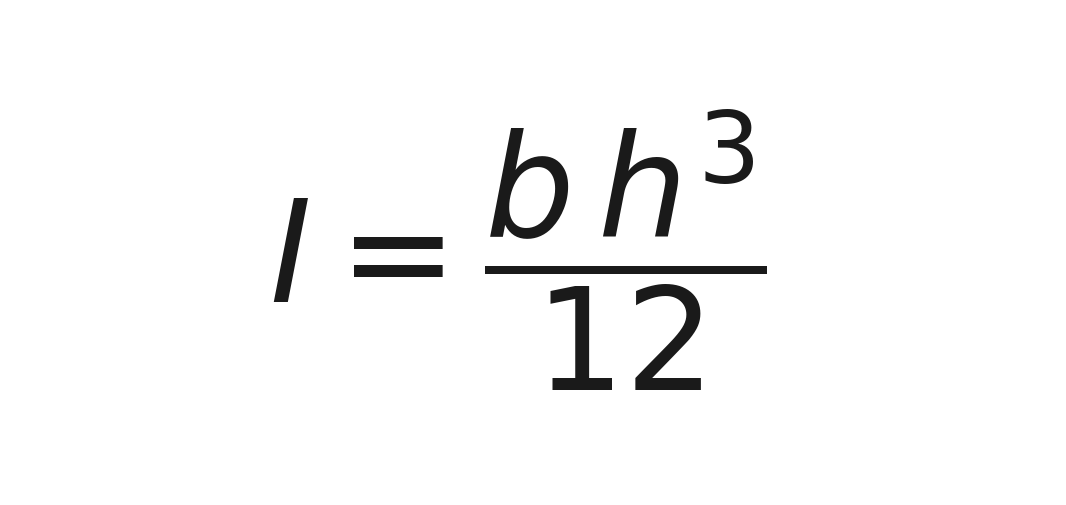
where b is the width and h is the thickness in the direction it’s bending. See that little 3 on the h? That’s the whole story. Because thickness is cubed, small changes in thickness make enormous changes in stiffness:
- Double the thickness of a flat tail and it becomes about 8× stiffer to bend (2 × 2 × 2 = 8). Not twice as stiff — eight times.
- For a round tail, it’s even steeper. A round section’s stiffness grows with the diameter to the fourth power, so doubling a round worm’s diameter makes it roughly 16× stiffer (2 × 2 × 2 × 2 = 16).
Read that again, because it’s the single most useful fact in bait design. You change a bait’s action far more by changing its thickness than by changing its plastic. A maker who thins a tail by even a third hasn’t made a small adjustment — they’ve roughly cut its bending stiffness in half. That thin-tailed grub whips and quivers not because it’s made of softer plastic than the fat stick worm, but because its thin cross-section has a tiny I. Geometry, raised to that third or fourth power, usually beats the formula. The mold shape isn’t just the silhouette the fish sees — it’s the dominant dial on how the bait moves.
The Second Geometry Lever: Length
Length is another major factor that influences soft plastic lure action. Thickness is one cube-law lever. Length is the other, and it works the opposite direction.
A bait tail is what engineers call a cantilever — anchored at one end (where it joins the body) and free to wave at the other (the tip). And for a cantilever, how far the free end bends grows with the length cubed. Double the length of an unsupported tail section and it bends about 8× more for the same push of water.
That’s why a long, thin tail tip flutters and whips so dramatically while a short, stubby tail barely moves. It’s not just that the long tail is thinner — it’s that length itself is a cube-law multiplier on how much it can droop and wave. Put the two laws together and you’ve got the bait designer’s real toolkit:
- Want more action in a section? Make it thinner (drops stiffness fast) and/or longer (raises bend fast).
- Want a section to stay rigid and hold its shape? Make it thicker and/or shorter.
A ribbon tail, a curly tail, a long thin worm — they’re all just clever applications of “thin and long bends a lot.” A beefy creature-bait body that holds its posture is “thick and short barely bends.” Same plastic throughout; the action is drawn in by where the maker puts thickness and length.
Make the length law concrete. Say a half-inch of tail tip wiggles a certain amount under the push of the water. Make that unsupported tip a full inch instead — only twice as long — and it doesn’t wave twice as much. Because length is cubed, it waves roughly eight times as much. That’s the difference between a tail that twitches and one that thrashes, from nothing but a little extra length. It’s also why trimming a worm down (a common on-the-water trick) deadens its action so noticeably — you’re not just making it shorter, you’re cutting the cube-law lever that gave it life.
Taper: action that builds toward the tip
This is why so many good baits are tapered — thick where they meet the hook, thinning toward the tip. A taper stacks both laws in your favor. The fat base has a big shape-stiffness, so it stays put and transmits the rod’s movement; the thin tip has a tiny shape-stiffness and sits at the far end of the longest lever, so it does almost all the actual moving. A tapered tail concentrates its action out at the tip while the base holds steady — exactly the lifelike “tail does the work, body follows” motion of a real swimming creature. A bait of uniform thickness, by contrast, bends evenly and tends to look stiffer and less alive.
Why little legs and frills come alive
The cube law also explains the tiny appendages on creature baits — the flapping legs, antennae, curly arms, and frills. Each one is extremely thin, so its shape-stiffness is almost nothing, and each is a little cantilever free to wave at its tip. Combine near-zero stiffness with the cantilever effect and the result is appendages that quiver and flap from the faintest current — even when the bait is sitting nearly still. That’s not the plastic being special; it’s geometry. A thin enough appendage will “breathe” on its own in the slightest water movement, which is exactly why finesse and creature baits load up on thin, dangly bits.
Why Paddle Tails Kick in Just One Direction
One more geometry trick, because it explains a whole category of baits. A flat section — like a paddle tail or a ribbon tail — has a thin dimension and a wide dimension. And here’s the thing: it bends easily across its thin dimension but strongly resists bending across its wide dimension. Same piece of plastic, two completely different stiffnesses depending on which way you flex it.
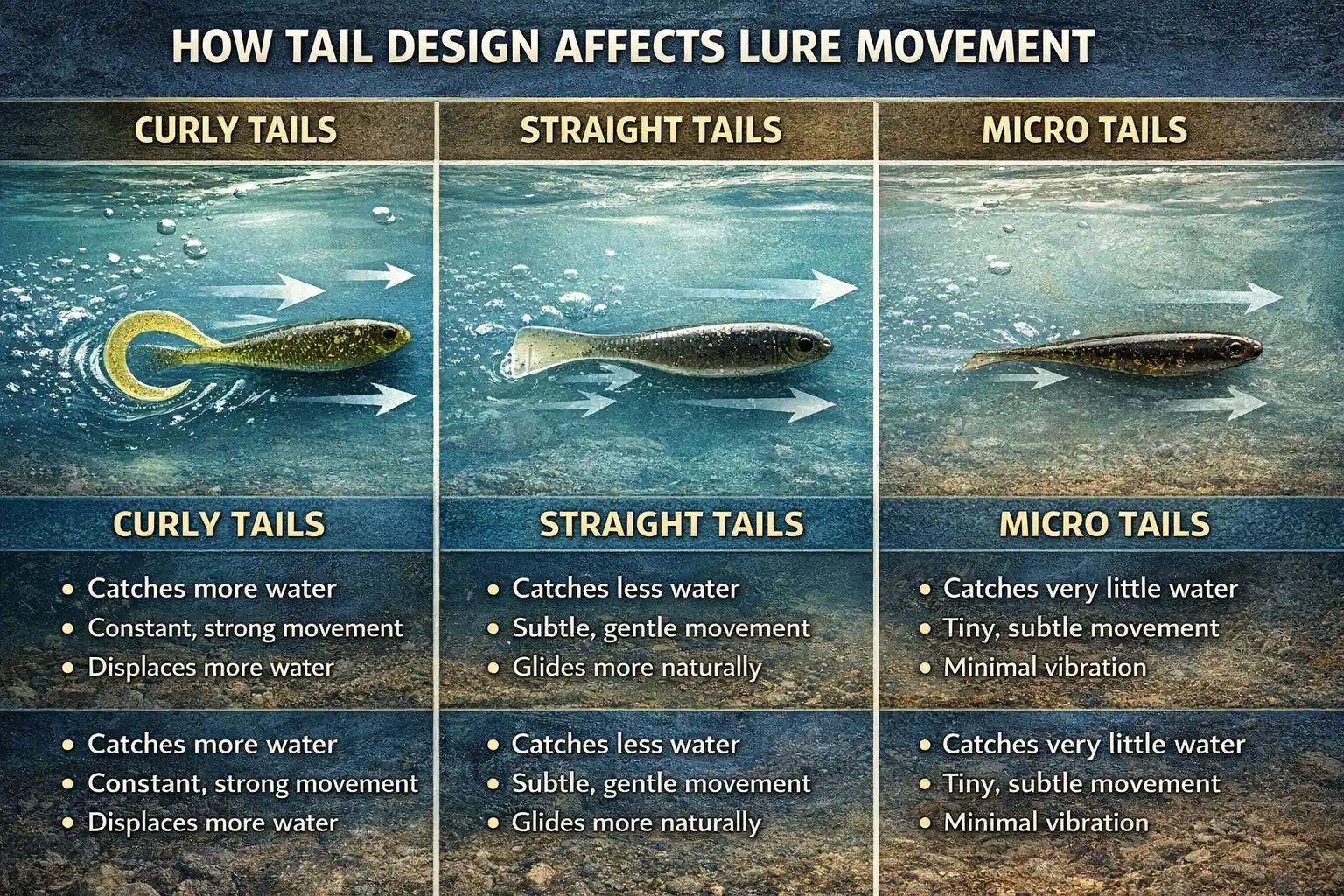
That directional stiffness is exactly why a paddle tail “kicks.” Water pressure flexes the flat paddle the easy way (across the thin dimension), so it snaps back and forth in one clean plane instead of flopping randomly in every direction. The flat shape doesn’t just look like a fish tail — it’s mechanically tuned to move in a single, repeatable kicking plane. Round tails, with no thin-versus-wide difference, wobble and roll instead. The cross-section shape is choosing the type of action.
The hollow-and-cupped trick
There’s one more layer to shape-stiffness worth knowing, because it explains tube baits and cupped paddles. Stiffness comes from material sitting far from the neutral middle — the farther out the material is, the more it resists bending (it’s the same reason a steel I-beam puts its metal in the top and bottom flanges, far from the center). For a bait, that means how the plastic is distributed matters, not just how much there is.
A hollow tube body, for instance, gets surprising stiffness for its weight because all its plastic is out at the rim, away from the center — while using less material. And a cupped or spoon-shaped paddle tail is stiffer than a flat one of the same thickness, because the curve pushes material away from the bending centerline. Makers use that on purpose: a slight cup in a paddle can firm up the kick and make it grab more water, without adding thickness. Shape isn’t only about thin-versus-thick — it’s about where the plastic lives relative to the bend.
Where the Action Lives — and Where the Bait Dies
Combine everything so far and you can predict the most important spot on any bait: the hinge. Wherever a bait gets thin — the narrow neck where a curl tail meets the body, the base of a craw’s pincer, the valleys between a ribbed worm’s ridges — that thin spot has a tiny shape-stiffness (I), so it bends far more than anywhere else. It becomes a hinge that concentrates almost all the flexing into one point. That’s deliberate: those engineered thin spots are where the action comes from.
But now flip it around. Remember from the flexure formula that bending stress is highest where the bending is sharpest and at the surface. So that same thin hinge — the one creating all your lovely action — is also the spot under the highest bending stress in the whole bait. The bait is built to bend hardest exactly where it’s structurally weakest.
That’s not a coincidence; it’s the central tension of bait design, and it’s why curl tails almost always tear off right at the hinge. The action and the failure share one address. Everything about why that high-stress spot eventually rips — the way repeated flexing grows a crack over many fish until the tail finally lets go — is the fatigue story, and we cover it fully in Why Soft Plastic Baits Tear. For this article the point is simpler: the hinge is the action, and the hinge is the risk, and they’re the same place.
Cold Water Stiffens Your Action (Warm Water Loosens It)
Here’s a practical twist the formula explains. Remember that bending resistance is material stiffness times shape stiffness — and material stiffness isn’t fixed. Soft plastic gets noticeably stiffer as it gets colder and softer as it warms. Drop the same bait into cold winter water and its plastic firms up, which means it bends less for the same push of water — its action flattens out. The identical bait in warm summer water is softer, bends more easily, and shows livelier action.
This is why a bait that looked perfect in the warm water you tested it in can feel dead in a cold lake, and it’s a real consideration for tuning: if you’re pouring baits for cold-water fishing, you may want them a touch softer or thinner than usual to keep the action alive at temperature, because the cold is going to stiffen them for you. Shape stiffness stays put with temperature; material stiffness rides up and down with the thermometer, and your action rides with it.
How to Feel and Test Bending at Your Bench
You don’t need engineering tools to use any of this. You can feel shape-stiffness directly and compare baits in a few minutes — and because a tail is a cantilever, the test is dead simple.
The droop test (your core tool). Lay a bait flat on the edge of a table so a set length hangs off the edge — say, hang the back half over the lip — and let go. How far the free end droops under its own weight is a direct read on its bending stiffness. Now do the same with a second bait, hanging the exact same length off the edge. The one that droops more is less stiff (more action-prone); the one that holds straighter is stiffer. Same overhang length every time, or the comparison means nothing (remember: length is a cube-law lever, so even a small difference in overhang throws the result way off).
Test thickness, not just formula. Want proof that geometry beats material? Pour the same plastic into two tails of different thickness and run the droop test. The thinner one will droop dramatically more — not a little, a lot — with zero change to the plastic. That’s the cube law you can see on your own table.
Find your hinge. Hold a finished bait and flex it slowly. Watch where it bends. That spot — almost always the thinnest section — is your hinge, your action point, and your future failure point all at once. If a bait isn’t kicking the way you want, the fix is usually at that hinge: thin it to loosen the action, thicken it to firm the action up and add durability.
Change one thing. Same rule as always: change thickness or length or plastic, never several at once, and compare against an unchanged control. Write down what drooped how far. Three lines in a notebook beat any amount of guessing.
Tuning Soft Plastic Lure Action on Purpose
Once you understand these relationships, soft plastic lure action becomes predictable instead of trial and error. Put the whole picture together and “designing action” stops being mysterious. You have three independent dials:
- Thickness (shape) — the strongest dial, because it’s cubed. Thin a section for more action; thicken it for less and for durability.
- Length (shape) — also cubed, opposite direction. Longer unsupported sections wave and flutter far more.
- Material softness (formula) — the plasticizer dial. Real, but usually a smaller lever than the two geometry ones, and it’s the one that costs you durability when you push it (softer plastic tears more easily — see the tear article).
The smart move, almost always, is to reach for geometry first. If you want a livelier tail, thinning the hinge or lengthening the tip will get you there faster — and with less durability penalty — than dumping in more plasticizer and weakening the whole bait. Design the bait so the thin, action-making hinges sit exactly where you want movement, keep the cross-section fat where you want rigidity and toughness, and only then reach for the material softness to fine-tune the feel.
Diagnose Your Action: What the Bait Is Telling You
If a bait isn’t moving right, the way it’s failing points straight to the fix:
- No action — it just hangs there like a stick. Too stiff: the section is too thick, too short, or the plastic’s too firm (or the water’s too cold). Thin the hinge, lengthen the tail, or soften the plastic — try geometry first.
- Floppy, mushy, washes out at speed. Too soft the other way: the section’s too thin or too long and can’t hold a clean kick once water loads it up. Thicken the hinge a touch or shorten the tail.
- Kicks erratically, rolls, or spins instead of a clean wag. A cross-section problem: a round or near-square section has no preferred bending plane, so it wobbles every direction. Flatten the tail to give it a thin dimension and it’ll pick a plane.
- Great action cold-tested in your hand, dead on the water. Likely a temperature mismatch — the plastic stiffened in colder water than you tested in. Soften or thin slightly for the conditions you actually fish.
- Tail tears off right where it bends best. Not an action problem at all — that’s the hinge doing both its jobs. See the tear article for toughening that spot without killing the action.
Where Bending Becomes Swimming
Everything here has been about how a bait bends as an object. The next question is how that bending turns into lifelike movement once water is pushing on it — why a bait with the right stiffness “breathes” and moves like living tissue while a too-stiff one just hangs there, and why the same bait’s action changes with how fast you reel. That’s about how the material responds to force in motion, and it’s the subject of how soft plastics move. And the deeper science behind all of these properties — what plastisol is and how the formula sets the material stiffness in the first place — lives on the Science of Plastisol hub.
The Bottom Line
A soft plastic doesn’t bend because of its plastic alone — it bends because of its plastic times its shape, and the shape term wins more often than not. Thickness and length both control bending by a cube law, so small changes in either make big changes in action. All that flexing concentrates at the bait’s thinnest point, the hinge — which is exactly why that’s where the action comes from and where the bait eventually fails. Once you can see the hinge and feel the droop, you’re not guessing at action anymore. You’re tuning soft plastic lure action.
Frequently Asked Questions
Does softer plastic always create more lure action?
Not necessarily. Softer plastic reduces material stiffness, but shape often has a larger effect on action than the formula itself. A thin tail made from medium-soft plastic can move more than a thick tail made from very soft plastic because geometry has such a strong influence on bending.
Why do thin lure tails move more than thick tails?
Bending stiffness increases dramatically as thickness increases. Small changes in tail thickness create large changes in how much a lure flexes, which is why thin tails flutter, kick, and quiver more easily than thick ones.
Why do soft plastic tails usually tear at the same spot?
Most soft plastics are designed with a thin hinge area that concentrates movement. That same hinge experiences the highest bending stress during use, making it both the source of the lure’s action and the most common failure point.
Does cold water reduce soft plastic lure action?
Yes. Plastisol becomes stiffer as water temperature drops. A lure that has excellent action in warm water may bend less and move more subtly in cold conditions because the material itself becomes less flexible.
What affects lure action more: shape or plastic formula?
Both matter, but shape is often the dominant factor. Tail thickness, length, taper, and hinge design can produce larger changes in action than switching between different softness levels of the same plastisol formula.
About Family Fishin
Family Fishin is a family-owned fishing tackle company dedicated to designing, testing, and producing high-quality fishing lures — inspired by generations of fishing tradition and driven by a passion for innovation. Every product is developed with one goal in mind: helping anglers spend more time doing what they love, catching fish and creating memories on the water.
Tags: #soft plastics #lure making #lure action #bait design #plastisol #DIY lures #paddle tail #lure bending