Part 4 — Best Jig Head Shapes for Trout
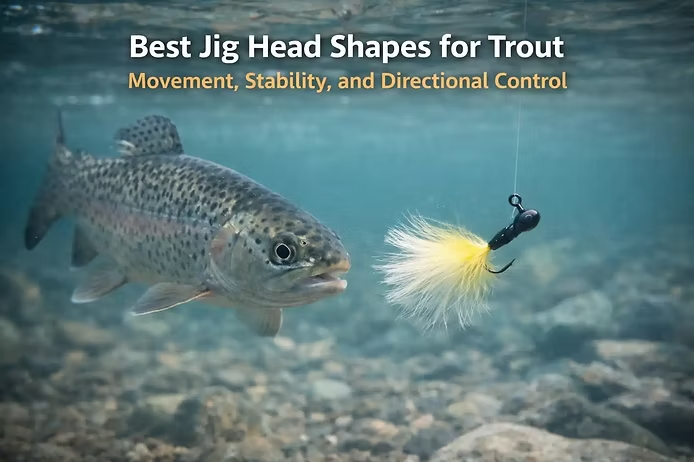
(Movement, Stability, and Directional Control Based on Real Jig Geometry)
Introduction
Best Jig Head Shapes for Trout
Understanding the best jig head shapes for trout is critical because shape controls how a jig moves, tracks, and presents itself in the water.
Jig head shape does not change weight—it changes how that weight behaves in the water.
Most anglers assume that if two jig heads weigh the same, they will perform the same.
That is incorrect.
Head shape controls:
- direction of movement
- stability during fall
- interaction with current
- how predictable or erratic the presentation appears
Two jig heads of identical weight can behave completely differently depending on shape.
Weight controls speed. Shape controls movement.
A. How Jig Head Shapes for Trout Control Movement and Presentation
Head shape determines how water flows around the jig.
This directly affects:
- resistance (drag)
- lift (glide vs drop)
- directional tracking
- rotational stability
Why This Matters
Trout respond to:
- consistent movement
- natural drift
- predictable presentation
When movement becomes:
- unstable
- unnatural
- too mechanical
Strike rates drop.
Core Principle
Shape determines whether your jig falls straight, glides, tracks, or wobbles.
The best jig head shapes for trout are not determined by appearance—they are determined by how each shape controls movement, stability, and direction in real fishing conditions.
B. Round (Ball Head) — Neutral Baseline
Geometry
- symmetrical mass
- centered weight
- no directional bias
Behavior
- straight vertical fall
- minimal directional movement
- neutral drift
Hydrodynamic Effect
- equal resistance on all sides
- no lift or glide
- consistent descent
Strengths
- predictable
- versatile
- easy to control
Limitations
- no movement enhancement
- no directional control
Best Use
- starting point
- unknown conditions
- general-purpose fishing
Key Principle
The round head is the baseline—everything else modifies movement from here.
C. Wedge Head — Controlled Glide and Directional Stability
Geometry
- angled front face
- flat bottom
- forward-weighted mass
Behavior
- forward glide during fall
- reduced rolling
- consistent tracking
Hydrodynamic Effect
- angled face deflects water downward
- creates forward movement
- stabilizes orientation
Strengths
- smoother, more natural descent than vertical drop
- improved control in current
- maintains consistent position on pause
Limitations
- less neutral than round head
- not ideal for pure dead drift
Best Use
- light to moderate current
- situations requiring controlled movement
- when vertical drop is too abrupt
Key Principle
A wedge head does not just fall—it glides forward in a controlled direction.
When comparing the best jig head shapes for trout, the key difference is how each design changes the fall path and movement behavior of the jig.
D. Flat Head — Stability and Orientation Control
Geometry
- flattened surfaces parallel to hook shank
- balanced mass distribution
- no forward-driving face
Behavior
- stable descent
- reduced rotation
- consistent alignment
Hydrodynamic Effect
- smooth water flow around the jig
- minimizes turbulence and spin
Strengths
- highly stable presentation
- maintains orientation
- reduces erratic movement
Limitations
- does not create forward movement
- does not significantly slow fall
Best Use
- clear water
- pressured fish
- finesse presentations
Key Principle
Flat heads control stability—they do not add movement.
E. Minnow Head — Forward Tracking and Momentum Control
Geometry
- elongated tapered nose
- forward mass bias
- streamlined body
Behavior
- forward tracking during fall
- reduced lateral drift
- directional movement
Hydrodynamic Effect
- splits water efficiently
- increases forward momentum
- creates glide path rather than vertical drop
Strengths
- produces lifelike movement
- maintains direction in current
- consistent retrieve path
Limitations
- less natural for dead drift
- can be too aggressive for pressured fish
Best Use
- active trout
- baitfish-style presentations
- situations where movement triggers strikes
Key Principle
Minnow heads convert vertical fall into forward movement and controlled glide.
F. D2 Style — Induced Wobble Through Asymmetrical Design
Geometry
- uneven mass distribution
- offset center of gravity
- one side heavier than the other
Behavior
- side-to-side wobble
- oscillating fall
- occasional spiral descent
Hydrodynamic Effect
- alternating drag from side to side
- shifting resistance during fall
- creates non-linear movement
Strengths
- breaks repetitive movement patterns
- adds subtle flash and variation
- triggers reaction strikes
Limitations
- less predictable
- harder to control precisely
- not ideal for structured drift presentations
Best Use
- pressured trout
- fish ignoring standard presentations
- situations where consistency fails
Key Principle
The D2 creates controlled instability, not randomness—its wobble is produced by intentional imbalance.
G. Shape Comparison System (Core Framework)
| Shape | Movement Type | Control Type |
| Round | Vertical fall | Neutral |
| Wedge | Controlled glide | Directional |
| Flat | Stable descent | Stabilizing |
| Minnow | Forward tracking glide | Momentum-driven |
| D2 | Wobble / oscillation | Instability-based |
H. Shape Selection System
Start Here
Round head
Adjust Based on What You Need
Need controlled glide?
→ wedge
Need maximum stability?
→ flat
Need forward movement?
→ minnow
Fish not reacting?
→ D2 or Custom Shapes
Key Rule
Change shape when you need to change movement—not when weight fails.
I. Custom Jig Head Shapes for Trout
Standard jig head shapes cover most situations—but they are not the limit.
Many effective jig designs are created by modifying:
- weight distribution
- head profile
- surface angles
These changes alter how the jig behaves in the water, even when the weight remains the same.
What Defines a Custom Shape
A custom jig head is not just a different look—it is a change in how the jig moves.
Custom designs can:
- shift the center of mass
- change how water flows around the head
- introduce new movement patterns
Examples of Custom Behavior
Depending on design, a custom head can:
- create a slower or faster glide
- increase or reduce stability
- introduce subtle wobble or directional changes
- combine characteristics of multiple standard shapes
Why This Matters
Trout do not respond to shape itself—they respond to:
- movement
- consistency
- variation
Custom shapes allow you to:
fine-tune movement beyond what standard designs provide
When Custom Shapes Become Important
Custom jig heads are most useful when:
- fish are pressured
- standard presentations stop working
- subtle differences trigger more strikes
Key Principle
Custom jig head shapes are tools for adjusting movement—not just changing appearance.
J. Common Mistakes
- assuming all jig heads behave the same
- choosing shape based on appearance instead of function
- using directional heads in finesse conditions
- adjusting weight when movement is the issue
Frequently Asked Questions About the Best Jig Head Shapes for Trout
Which jig head shape is best for trout?
There is no single best jig head shape. The best choice depends on the presentation you need:
- Round: General-purpose fishing and vertical falls.
- Wedge: Controlled forward glide in current.
- Flat: Maximum stability for finesse presentations.
- Minnow: Forward tracking that imitates swimming baitfish.
- D2 Style: Controlled wobble to trigger reaction strikes.
Choose the shape that creates the movement trout are responding to.
Does jig head shape affect sink rate?
Not significantly. Sink rate is primarily determined by jig head weight. Shape influences how the lure moves as it sinks, including whether it falls straight down, glides forward, or wobbles during the descent.
When should I use a round jig head for trout?
Round jig heads are the best starting point when fishing unfamiliar water. Their symmetrical design creates a neutral, predictable presentation that works well for drifting, jigging, and general trout fishing in a wide range of conditions.
Are wedge jig heads better in rivers?
Often, yes. A wedge-shaped head creates controlled forward glide and better directional stability in moving water. This can help maintain a natural drift while reducing unwanted rolling in current.
What is the advantage of a flat jig head?
Flat jig heads improve stability by reducing lure rotation and keeping the hook and soft plastic properly aligned. They are especially effective for clear water, pressured trout, and finesse presentations where a consistent, natural movement is important.
When should I use a minnow-style jig head?
Minnow heads are ideal when trout are actively feeding on baitfish. Their streamlined profile encourages forward tracking and a longer glide, producing a more lifelike swimming action during retrieves and the fall.
What is a D2-style jig head?
A D2-style jig head uses an intentionally offset center of gravity to create a controlled side-to-side wobble during the fall. The movement is engineered rather than random and can trigger strikes from trout that ignore more traditional presentations.
Should I change jig head weight or shape first?
Determine what needs to change:
- If the lure is fishing too shallow or too deep, change weight.
- If the lure is moving unnaturally or not triggering strikes, change shape.
Weight controls speed. Shape controls movement.
Can custom jig head shapes catch more trout?
Custom jig head designs can improve presentations by changing weight distribution, water flow, and movement characteristics. In heavily pressured fisheries, these subtle differences can produce strikes when standard jig heads no longer do.
Does jig head shape matter with soft plastic trout worms?
Absolutely. The same trout worm behaves differently depending on the jig head used. A round head produces a neutral presentation, a wedge head adds glide, a flat head increases stability, and a D2-style head introduces subtle wobble. Matching the jig head to the soft plastic allows anglers to fine-tune lure action without changing the bait itself.
What’s more important for trout: jig head shape or color?
Movement almost always has a greater influence than color. If the lure is moving unnaturally, changing colors rarely fixes the problem. Start by selecting the correct jig head weight and shape, then fine-tune your presentation with color if needed.
Continue to Part 5
For a deeper breakdown of how color affects visibility and strike response, see:
Part 5 — Does Jig Head Color Matter for Trout
Continue the Trout Jig System
If you have not read the previous parts:
Best Hook Size for Trout Jigs (Part 3)