Thermochromic Lures: How Temperature-Triggered Color Change Works
Temperature changes color. That is the entire idea behind thermochromic fishing lures — and it sounds like a gimmick right up until you understand what is actually happening inside the bait, and when water temperature changes fast enough to matter on the water.
This is the second article in the effect-pigment family covered on the Science of Plastisol hub. The first was photochromic lures, which change color in sunlight. Thermochromic lures change color with heat — a different trigger, a different mechanism, and a genuinely different set of fishing applications. Understanding both tells you when each one matters and when neither one does.
What Thermochromic Means
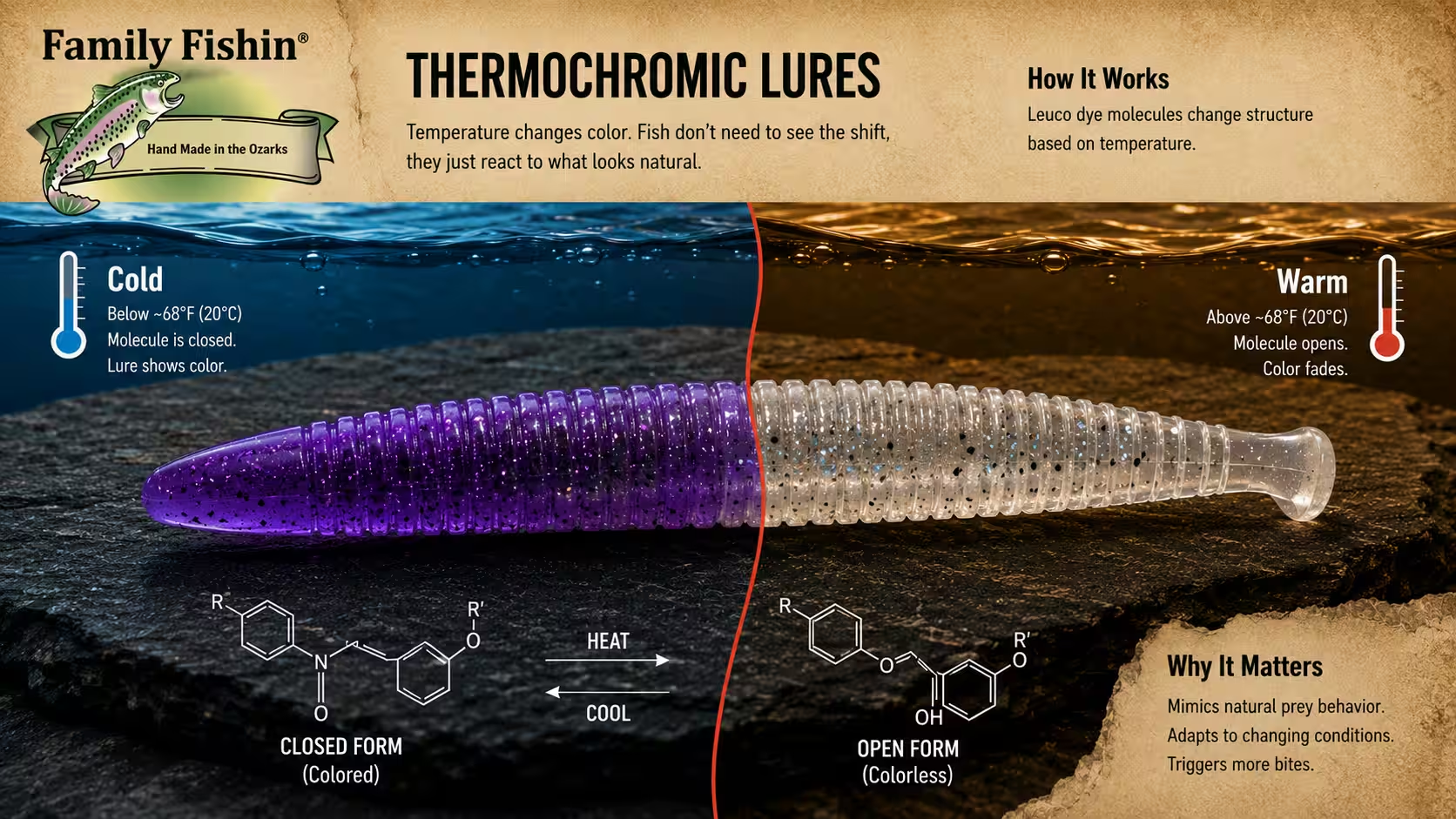
Thermochromic literally means color that changes with temperature. The prefix thermo comes from the Greek for heat; chromic from color. A thermochromic material is one whose color changes reversibly as it moves above or below a specific temperature threshold — typically called the transition temperature or activation temperature. Below that threshold the material shows one color. Above it the color either fades dramatically or disappears entirely. Drop back below and the color returns. The change is fully reversible and can cycle thousands of times.
In fishing lures, thermochromic pigments are blended into the plastisol formula before pouring, or applied as a coating over a finished bait. The result is a bait that changes appearance as it moves through water of different temperatures — from cold deep zones to warm surface layers, through a thermocline, or even simply warming in your hand before a cast.
The Chemistry: How Leuco Dye Systems Work
The most common thermochromic system used in lures — and in thermochromic products generally — is based on a three-component leuco dye system. Leuco comes from the Greek for white, and it refers to a colorless or reduced form of a dye. The three components are a leuco dye (the color compound), a developer (an acidic compound that activates the dye), and a solvent (which controls when the developer and dye interact).
Here is how they work together. At low temperatures, the solvent is solid. In that solid state the developer and the leuco dye are in close contact, the developer activates the dye, and the dye shows its color — you see a colored bait. As temperature rises and the solvent melts, the developer and dye separate and can no longer interact. With no developer present, the leuco dye reverts to its colorless form — the color fades or disappears, revealing whatever color is underneath (often white or a base color). Cool it back down, the solvent solidifies again, developer and dye come back into contact, color returns.
The transition temperature is set by choosing a solvent with the right melting point. A solvent that melts at 20°C produces a bait that changes color around that temperature. A solvent melting at 25°C pushes the transition warmer. Manufacturers can engineer the transition to occur at almost any temperature in the range that matters for fishing — roughly 10°C to 30°C — by selecting the right solvent.
The whole system is encapsulated in tiny polymer microcapsules before being blended into pigment. These microcapsules protect the three-component system from direct contact with the plastisol, solvents, and other ingredients in the formula — without that protection the system would break down immediately. The microcapsules also give the pigment its characteristic opacity and slightly waxy feel when concentrated.
The Transition Is a Window, Not a Switch
It is tempting to think of thermochromic color change as a hard flip — colored at 19°C, clear at 21°C. In reality the transition happens across a window of several degrees, not at a single point. This is because real solvent melting is not perfectly sharp, and because microcapsules in a batch are not all precisely identical. The practical result is that a bait begins shifting color a few degrees before the nominal transition temperature and finishes the shift a few degrees after. For fishing purposes, this is actually useful — a gradual shift is more visible and more natural-looking than an abrupt one.
The transition is also affected by how long the bait has been at a given temperature. A bait that moves slowly through a thermocline will complete the color shift before it reaches the bottom of the transition window. A bait that moves fast may only partially shift before being retrieved into different water. In practice the change is fast enough that it tracks temperature changes well at normal fishing depths and speeds.
What Color Does It Show, and What Does It Reveal?
A thermochromic bait has two visual states: the colored state (typically the cooler, below-threshold state) and the revealed state (the color underneath when the thermochromic pigment goes clear). The designer controls both.
The thermochromic color — what the bait shows in cold water — can be almost any hue a leuco dye can produce: blue, green, purple, red, pink. The revealed color is whatever base color the bait is underneath, which might be white, natural, or a second solid color. This means you can engineer quite specific combinations: a bait that is dark purple in cold deep water and fades to a pale natural or white as it rises into warm surface water. Or a bait that shows chartreuse in cold water and fades to clear, revealing a glitter base underneath.
The most effective combinations tend to work with the natural temperature gradient of the water column rather than against it. Cold water is typically deeper, warmer water shallower. A bait that shows high-contrast color in the cold zone and mutes as it rises into the warm zone is producing a visible signal where contrast is most useful — in the dark, cold, deep water — and reducing it near the surface where light is abundant and contrast matters less.
How Thermochromic Differs from Photochromic
It is worth being precise about the difference because the two effects are often mentioned together and sometimes confused. Photochromic pigments are triggered by UV light — they color up in sunlight and fade in shade. Thermochromic pigments are triggered by temperature — they color up when cold and fade when warm (in the most common fishing application).
The practical difference on the water is significant. Photochromic baits respond to whether they are in sunlight or shadow, which means their color shift is driven by cloud cover, depth, and surface conditions more than by water temperature. Thermochromic baits respond to where they are in the water column — specifically to the temperature gradient between surface and depth. On a day with a pronounced thermocline, a thermochromic bait changes color at roughly the same depth every cast, because the thermocline is relatively stable. A photochromic bait on the same day changes color based on light, which varies with sun angle and cloud cover.
Neither is universally better. They are different tools. A photochromic bait is useful when you want a bait that responds dynamically to changing light conditions through the day. A thermochromic bait is useful when you are fishing across a thermocline or a consistent temperature gradient where you want the bait to present differently at different depths.
When Thermochromic Actually Matters on the Water
The honest answer is that thermochromic color change matters most in specific conditions and matters very little in others. Here is where it makes a real difference.
Fishing a thermocline. In stratified water — a lake or reservoir in summer where warm water sits above a distinct cold layer — a thermochromic bait crosses the transition temperature at roughly the same depth every time. Fish holding just below the thermocline see the bait change color as it descends through the boundary layer. Whether this triggers more strikes is difficult to study rigorously, but the color change does produce a sudden visual event at the point where predatory fish are often positioned.
Deep jigging in cold water. When the deep zone is significantly colder than the surface — common in clear, deep lakes and reservoirs in spring and fall — a thermochromic bait will show its cool-state color for most of the retrieve. This is less a dynamic effect and more a simple color selection tool: choose the transition temperature so the bait shows the color you want at fishing depth.
Warming in the hand before a cast. This is a small but real effect. A bait held in the hand for a few seconds will warm above the transition temperature and partially or fully fade, then cool and return to full color within seconds of entering the water. In practice this produces a bait that visibly brightens immediately after the cast, which can look like an injured or fleeing baitfish to a predator watching from below.
Temperature changes through the day. In shallow water that warms significantly from morning to afternoon — early spring, cold-weather bass fishing, stocked trout lakes with temperature swings — a thermochromic bait set to transition at the midday surface temperature will shift between its two color states as conditions change. This is more of a subtle effect than a strategic one, but it does mean the bait is self-adjusting to a degree.
Where thermochromic does not matter: in water with little or no temperature gradient — most small streams, shallow ponds in summer, water that mixes well — the bait will spend its entire time on one side of the transition or the other and will just look like a solid-color bait. There is nothing wrong with that, but the effect is not doing any work.
Durability in Soft Plastics
Thermochromic pigments are more delicate than standard colorants and more delicate than phosphorescent pigments. The microcapsules that protect the leuco dye system are tough enough for most fishing use but can be damaged by a few things worth knowing.
UV light degrades the leuco dye system over time. Prolonged direct sun exposure — leaving baits out on the boat deck all day, storing them in a clear bag in a sunny tackle box — will gradually reduce the intensity of the color shift. Keep thermochromic baits out of direct sun when not in use.
High pouring temperatures during manufacture can damage the microcapsules before the bait is ever fished. This is a manufacturing concern more than a fishing one, but it explains why some cheap thermochromic baits show weak or uneven color change — the pigment was damaged in the pot. Quality control matters more with these pigments than with standard colorants.
Organic solvents dissolve the microcapsule shell and destroy the system. This is mostly relevant to storage: do not store thermochromic soft plastics in bags or containers that have been contaminated with petroleum-based products, strong attractants, or solvent-based cleaners. Standard plastisol-compatible storage is fine.
Normal fishing use — casting, jigging, being eaten and retrieved — does not meaningfully damage thermochromic pigments in a well-poured soft plastic. The pigment is encapsulated within the bait matrix and protected from mechanical abrasion in normal use.
Thermochromic in the Family Fishin Context
At Family Fishin we pour primarily for stocked and pressured trout in Ozarks streams and state park waters. Those are shallow, relatively well-mixed waters. The temperature gradient is modest compared to a deep reservoir in summer. That means thermochromic is not a first tool in our arsenal for trout fishing specifically — the conditions where it works best are not the conditions we fish most.
That said, it is a legitimate effect in the right environment, and it is part of understanding the full range of what plastisol and pigment science can do. For anglers fishing deeper, stratified water — bass and walleye in reservoirs with a strong summer thermocline, for instance — thermochromic is a real tool rather than a novelty.
The bigger picture is that thermochromic, photochromic, glow, and fluorescent pigments are all doing different things for different reasons in different conditions. Understanding the mechanism behind each one is what tells you when to reach for it. The full family is on the Science of Plastisol hub.
Frequently Asked Questions
What makes a fishing lure thermochromic?
A thermochromic lure contains pigment that changes color at a specific temperature threshold. Below the transition temperature the pigment shows color; above it the color fades or disappears. The most common system uses encapsulated leuco dyes that interact with a developer compound only when a solvent component is solidified by cold temperatures.
At what temperature do thermochromic lures change color?
It depends on the formulation. The transition temperature is set during manufacture by choosing a solvent with the appropriate melting point. Most fishing lure applications target transitions somewhere between 15°C and 25°C (59°F to 77°F), designed to activate in the range of water temperatures fish are commonly found in.
Is the color change permanent?
No. Thermochromic color change is fully reversible. The bait will cycle between its colored and faded states as many times as it crosses the transition temperature. The system does degrade slowly over time with UV exposure and heat, which gradually weakens the intensity of the shift.
What is the difference between thermochromic and photochromic lures?
Thermochromic lures change color in response to temperature. Photochromic lures change color in response to UV light. They use completely different pigment systems. Thermochromic is most useful when fishing across a temperature gradient such as a thermocline. Photochromic is most useful when fishing through changing light conditions — cloud cover, depth changes, dawn and dusk transitions.
Do thermochromic lures catch more fish?
In the right conditions — specifically when fishing across a pronounced thermocline in stratified water — the color change produces a sudden visual event that can trigger strikes from predators holding at the thermocline boundary. In well-mixed water without a significant temperature gradient, the effect is minimal. Like any lure feature, it is a tool that works in specific situations rather than a universal advantage.
How do you store thermochromic soft plastic lures?
Keep them away from prolonged direct sun exposure, which degrades the leuco dye system over time. Store in standard plastisol-compatible bags or containers and avoid contact with petroleum-based solvents or strong chemical attractants, which can damage the microcapsule shells that protect the pigment system.
Can thermochromic pigments be poured into plastisol at home?
Yes, but with care. The microcapsules that protect the leuco dye system are sensitive to high temperatures. Pouring temperature should be kept at the lower end of the fusion window — typically around 170–175°C — to avoid damaging the pigment before the bait sets. Test a small batch before committing to a larger pour, and check that the color change function survives the process.