Part 2 — How Jig Head Weight Affects Trout
(Fall Rate, Strike Window, Depth Control, and Real-World Measurement)
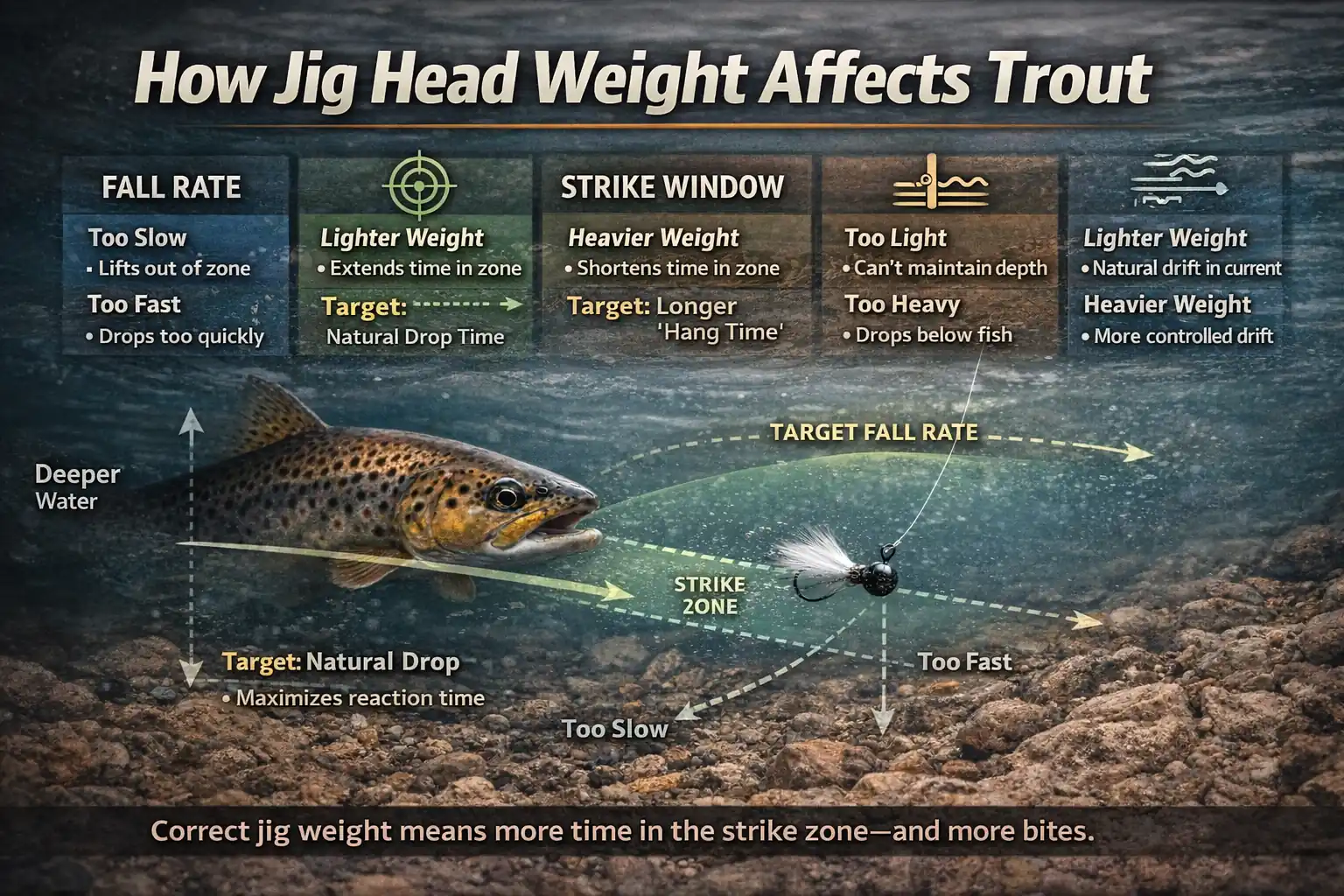
Correct jig weight controls fall rate and keeps the lure in the strike zone longer, increasing bite opportunities.
Introduction
Jig head weight is the single most important variable in trout fishing. Not because it determines how deep the jig goes — but because it controls how the jig behaves every second it is in the water.
Weight directly controls: Fall rate (how fast the jig sinks), Strike window (how long fish can react), Depth control (where the jig stays), and Drift behavior (how natural it looks).
If weight is wrong: color will not fix it, shape will not fix it, presentation will not fix it. Correct weight creates opportunity. Everything else refines it.
Jig head weight is only one part of the larger trout system. Soft plastic profile, material softness, water clarity, retrieve speed, and seasonal trout behavior all work together to determine strike conversion. → Best Soft Plastics for Trout (Complete Trout Fishing System Guide)
A. Fall Rate (Primary Driver of Success)
Fall rate is the speed at which the jig moves through the water column. This is where most trout strikes occur.
Trout typically hold position in current or structure, watch food drift naturally, and react to vertical or drifting movement. A jig falling at the correct rate stays visible longer, appears natural, and triggers instinctive strikes.
Incorrect Fall Rate Outcomes
- Too Fast (Overweighted): Passes through strike zone quickly, reduces reaction time, forces trout to chase. Result: fewer bites, lower conversion.
- Too Slow (Underweighted): Poor depth penetration, excessive drift, inconsistent control. Result: missed positioning, reduced efficiency.
Core Principle: The goal is not the lightest jig — it is the correct fall rate for the conditions.
B. Strike Window (Where Fish Are Caught)
The strike window is the amount of time your jig is in a position where a trout can strike. This is the most important concept most anglers overlook.
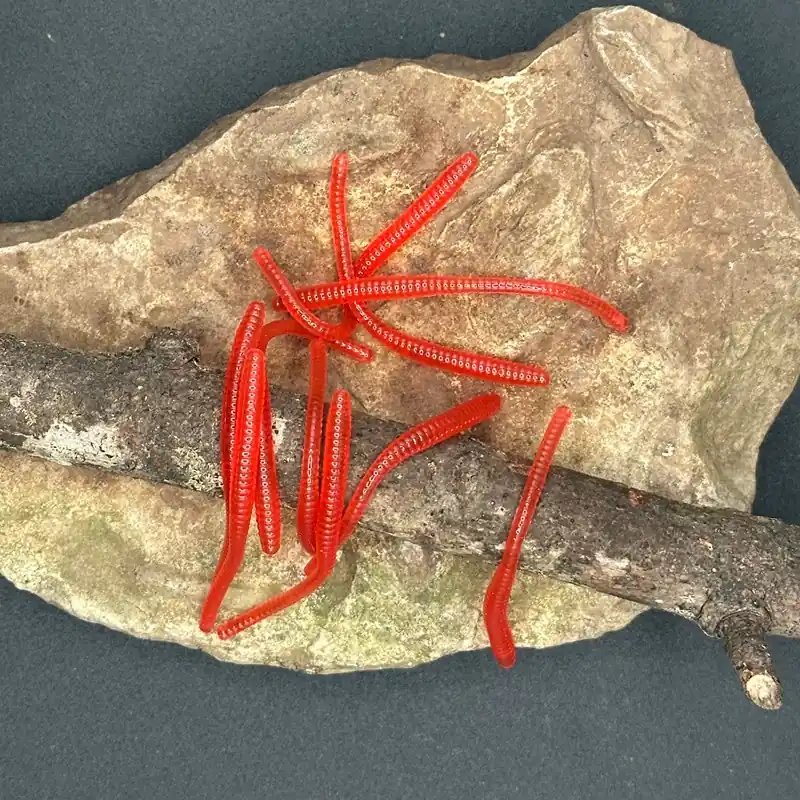
Strike window performance is heavily influenced by the softness and movement characteristics of the bait itself. Ribbed worms and softer finesse plastics often stay active longer during slow presentations. → Best Soft Plastics for Trout
- Lighter Weights: Longer hang time, slower descent, increased visibility. Best for cold water, pressured trout, clear conditions.
- Heavier Weights: Shorter hang time, faster descent, reduced reaction time. Best for current, depth, active fish.
Real-World Insight: A jig that stays in the strike zone longer will consistently outproduce one that passes through it quickly — even if everything else is identical.
C. Depth Control (Reaching vs Staying)
Most anglers think “I need enough weight to get down.” That is incomplete. The goal is not reaching depth — it is staying in the correct depth.
- Too Light: Cannot reach fish, pushed by current, loses vertical control.
- Too Heavy: Drops below fish too quickly, exits strike zone immediately.
- Correct Weight: Reaches target depth, maintains position during retrieve, stays in strike zone longer.
D. Drift Behavior (Natural vs Controlled)
Trout respond strongly to natural movement. Weight determines how your jig interacts with current.
- Natural Drift (Lighter Weights): Follows current flow, subtle realistic movement, low resistance. Best for pressured fish, clear water, finesse presentations.
- Controlled Drift (Heavier Weights): Cuts through current, maintains line tension, predictable path. Best for deeper water, stronger current.
Key Principle: Natural drift produces more bites. Controlled drift maintains positioning.
E. Transition Weights (Advanced Concept)
Not all weights behave in clean categories. Some act as threshold weights. Example: 1/100 oz. This weight maintains finesse characteristics while providing enough control. It sits between ultra-light presentations and standard finesse setups.
Experienced anglers do not think in fixed sizes — they think in control vs drift, depth vs hang time.
Key Principle: Transition weights allow fine-tuning without drastic changes.
F. How to Measure Fall Rate (Field Method)
1. Visual Drop Test (Best Method)
Stand in shallow, clear water (1–4 ft). Drop jig vertically with slack line and observe descent.
- Correct Fall Rate: Smooth descent, visible throughout fall, controlled movement.
- Too Fast: Drops out of sight quickly, hits bottom immediately, no lateral movement.
- Too Slow: Excessive drift, delayed descent, poor control.
2. Countdown Method (When Visibility Is Limited)
Cast jig and count seconds until bottom or target depth.
- 2–3 seconds → too fast
- 4–6 seconds → optimal range
- 7+ seconds → slow
3. Line Behavior Analysis (Advanced)
- Correct: Controlled slack, subtle tension changes
- Too Fast: Immediate slack, sudden stop
- Too Slow: Excessive drift, no clear bottom signal
4. Bite Feedback (Final Validation)
The most reliable measurement — are you getting bites during the fall?
- No bites → go lighter
- Inconsistent control → go heavier
- Missed bites → fine-tune weight
Key Principle: The correct fall rate is the one that produces bites — not the one that feels right.
G. Real-World Application Scenarios
- Scenario 1 — Clear, Pressured Water: 1/256 → 1/100 oz. Goal: maximize strike window.
- Scenario 2 — General Conditions: 1/100 → 1/80 oz. Goal: balance control and finesse.
- Scenario 3 — Moderate Depth/Current: 1/64 → 1/32 oz. Goal: maintain depth.
- Scenario 4 — Heavy Current: 1/32 → 1/16 oz. Goal: maintain control.
H. Decision System (Simple Execution Framework)
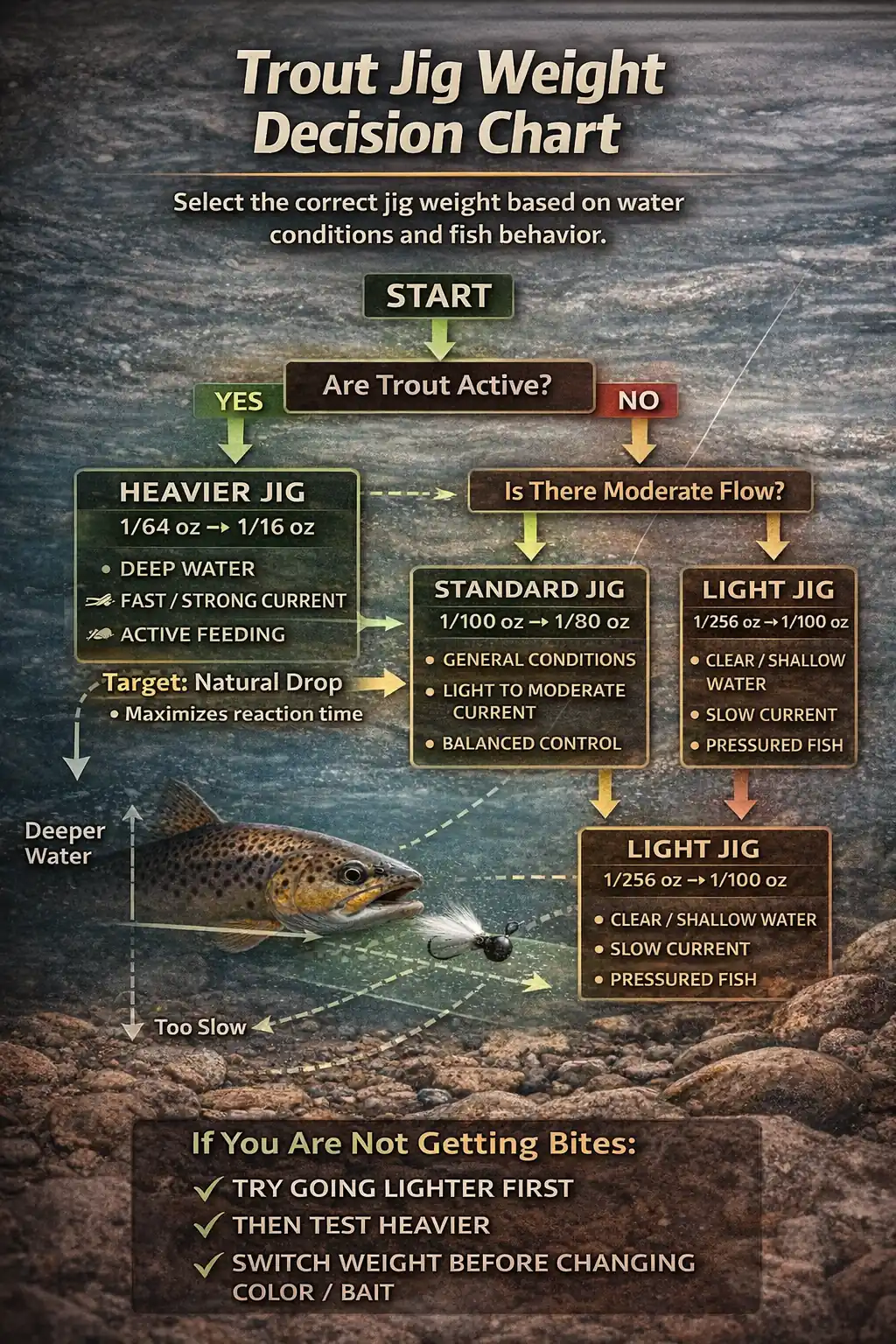
Start with 1/80 oz.
- Go lighter when: fish are pressured, water is clear, bites are slow
- Go heavier when: current increases, depth increases, you lose bottom contact
Final Rule: Always adjust weight before changing color, bait, or presentation.
I. Common Mistakes
- Choosing weight based on casting distance
- Staying too heavy out of habit
- Ignoring current speed
- Not adjusting during changing conditions
Continue to Part 3
For a deeper breakdown of how hook size affects bite conversion and hook retention, see: Part 3 — Best Hook Size for Trout Jigs
Summary
- Weight controls everything
- Fall rate determines success
- Strike window drives bites
- Depth control keeps you in position
- Natural drift outperforms forced movement
- Small adjustments create large changes
Action Checklist
Before fishing: Start with 1/80 oz, test fall rate visually if possible, adjust based on depth and current.
During fishing: Watch fall behavior, monitor line feedback, adjust weight before changing anything else.
Frequently Asked Questions About Trout Jig Head Weight
What jig head weight is best for trout?
The best jig head weight for trout depends on water depth, current speed, and how long you need the bait to stay in the strike zone. In most trout fishing situations, 1/100 oz to 1/64 oz provides the best balance between natural drift and depth control.
Is lighter jig weight better for trout?
Not always. Lighter jig heads increase hang time and natural drift, but if the bait cannot maintain depth or control in current, trout may never see it. The correct weight is the one that maintains the best fall rate for the conditions.
Why do trout follow my jig but not bite?
Trout often follow without striking when the jig falls too quickly, moves unnaturally, or exits the strike zone too fast. In many cases, slightly reducing jig weight improves strike conversion by increasing hang time and natural drift.
What jig weight works best in clear water?
In clear water, lighter jig heads such as 1/256 oz to 1/100 oz usually perform best because they create a slower fall rate and more natural presentation.
Does jig weight affect fall rate?
Yes. Jig head weight directly controls fall rate, strike window duration, drift behavior, and depth positioning. Small weight adjustments create major changes in how trout react to the presentation.
Should I change jig weight before changing lure color?
Yes. Weight usually affects trout behavior more than color because it controls how the lure moves through the water. Inconsistent fall rate or poor depth control often causes more problems than lure color.
What is the best all-around trout jig weight?
For most trout fishing conditions, 1/80 oz is one of the best starting points because it balances finesse, depth control, and natural drift across a wide range of water conditions.
How do I know if my jig is too heavy for trout?
A jig is usually too heavy if it drops out of the strike zone too quickly, hits bottom immediately, or causes trout to follow without committing. Overweighted jigs often reduce reaction time and create unnatural movement.
How do I know if my jig is too light?
A jig is usually too light when it cannot maintain depth, drifts excessively in current, or loses contact with the strike zone. Underweighted jigs often reduce control and consistency.
Does current affect jig head weight selection?
Yes. Faster current usually requires heavier jig heads to maintain depth and control. Slower water and calm conditions often allow lighter weights that produce a more natural drift and longer strike window.