Why Trout Eat Crawfish
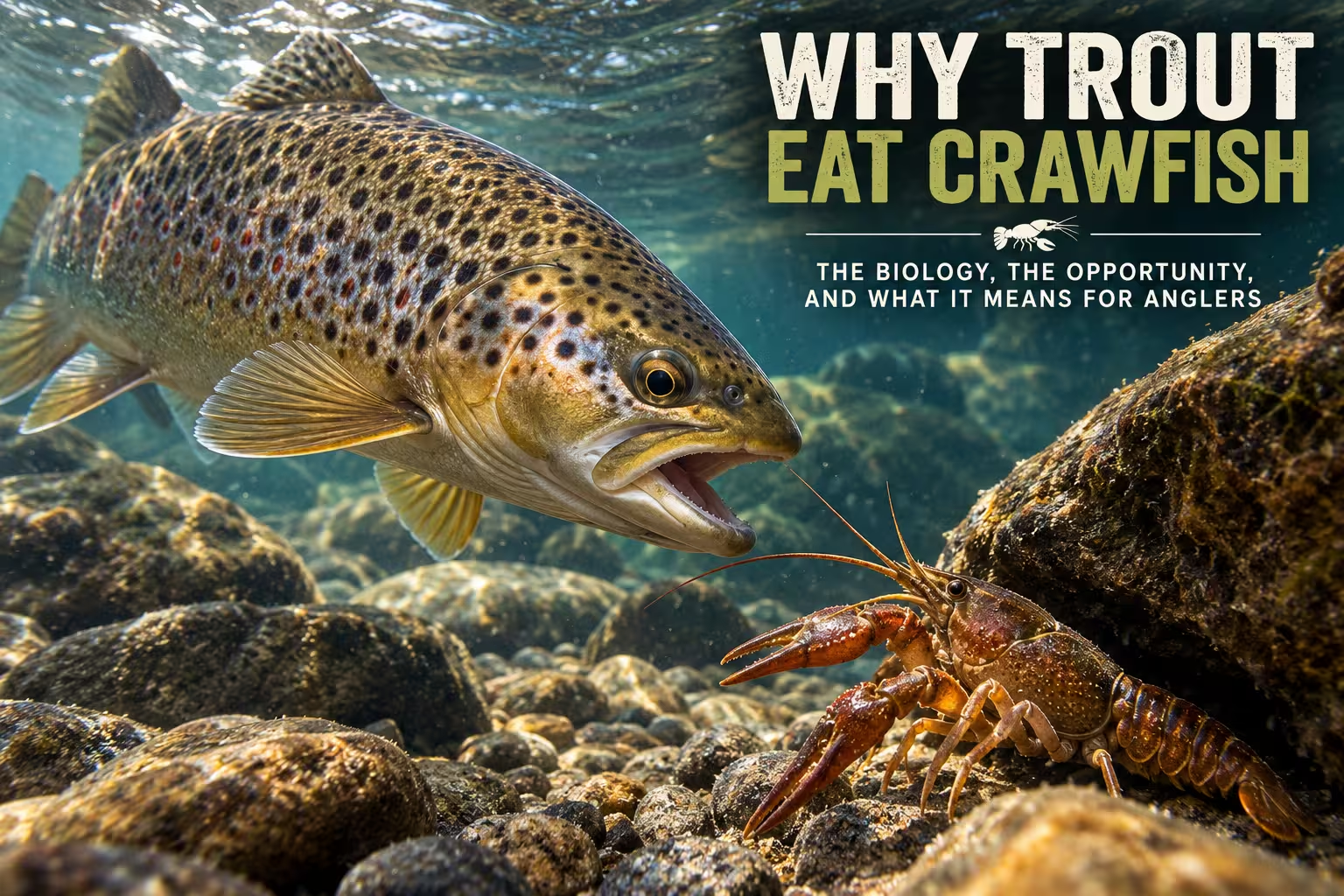
Ask any guide who’s netted a wall-hanger brown trout what was in its stomach when it finally gave in to gastric lavage, and crawfish parts come up more often than most anglers expect. Not mayflies. Not a half-digested sculpin. Claws, tail sections, and shell fragments — sometimes several crawfish at once, in various stages of digestion. For a fish with a reputation as a dainty insect-sipper, that’s a strange thing to find. It isn’t strange once you understand the biology, and understanding why trout eat crawfish changes how you fish crawfish imitations for trout — not just which pattern to tie on, but where, when, and how to work it.
This is the third post in our Trout Food Sources series. If you haven’t read the first two, it’s worth doing so before this one, because the ideas build on each other. Our overview on how trout diet shifts by season lays the groundwork for why a trout’s feeding priorities change with water temperature and metabolism, and our piece on why trout eat minnows covers the other major high-calorie shift in a trout’s diet — the move toward baitfish predation as trout grow. Crawfish sit in an interesting middle ground between those two posts: not as calorie-dense as a baitfish, but far more calorie-dense than an insect, and available on a completely different schedule than either one. We’ve also covered crawfish biology and behavior more broadly in The Crawfish Connection, which looks at how crayfish drive feeding across trout, bass, and catfish. This post narrows that lens specifically onto trout — why they target crawfish at all, which trout do it most, and what that means for how you fish a craw imitation in trout water.
Why Trout Eat Crawfish: The Calorie Math
Every meal a trout eats has to clear the same basic hurdle: the energy gained from eating it has to exceed the energy spent catching it. We covered this math in detail in our minnows post, where a baitfish’s calorie density explained why larger trout increasingly key in on fish over insects. Crawfish complicate that simple hierarchy, and understanding where they fit is the first step to understanding why trout eat them at all.
Pound for pound, a crawfish delivers less usable energy than a minnow of similar size — research on crustacean prey generally puts that figure at something like half the caloric return of an equivalent-sized baitfish. That’s a real gap. If calories were the only variable, a trout should always prefer a minnow over a crawfish of the same size, and in a stream that offers both in equal abundance, it often does. But calories in versus calories out was never the whole equation — the other half is the cost and risk of catching the meal, and that’s where crawfish start to win.
A minnow is fast, alert, and equipped with a lateral line and a startle response built by millions of years of predator pressure. Catching one takes acceleration, precise timing, and often several failed attempts before a successful strike. A crawfish, by contrast, is slow. It doesn’t swim through open water — it crawls, and its only real escape mechanism is a short, backward tail-flip that covers a few inches before it has to stop and reorient. It can’t outrun a trout, it can’t out-turn a trout, and once it’s out of cover, it has very few options left. Chasing a minnow is a sprint with a real chance of coming up empty. Cornering a crawfish along a rock ledge is closer to a guaranteed payoff, just a smaller one.
That trade-off — lower calories per catch, but a dramatically higher success rate and lower energy cost per attempt — is the real reason crawfish earn a permanent place in the diet of larger trout rather than getting crowded out by baitfish. A trout doesn’t need every meal to be the biggest possible haul; it needs its average return, across all the meals it eats in a day, to stay positive with the lowest possible risk of failure or injury. Unlike a baitfish that can dart away and force a trout to reposition and try again, a crawfish backed into a rock crevice has nowhere left to go — and that reliability is worth a great deal even at a lower per-meal calorie count.
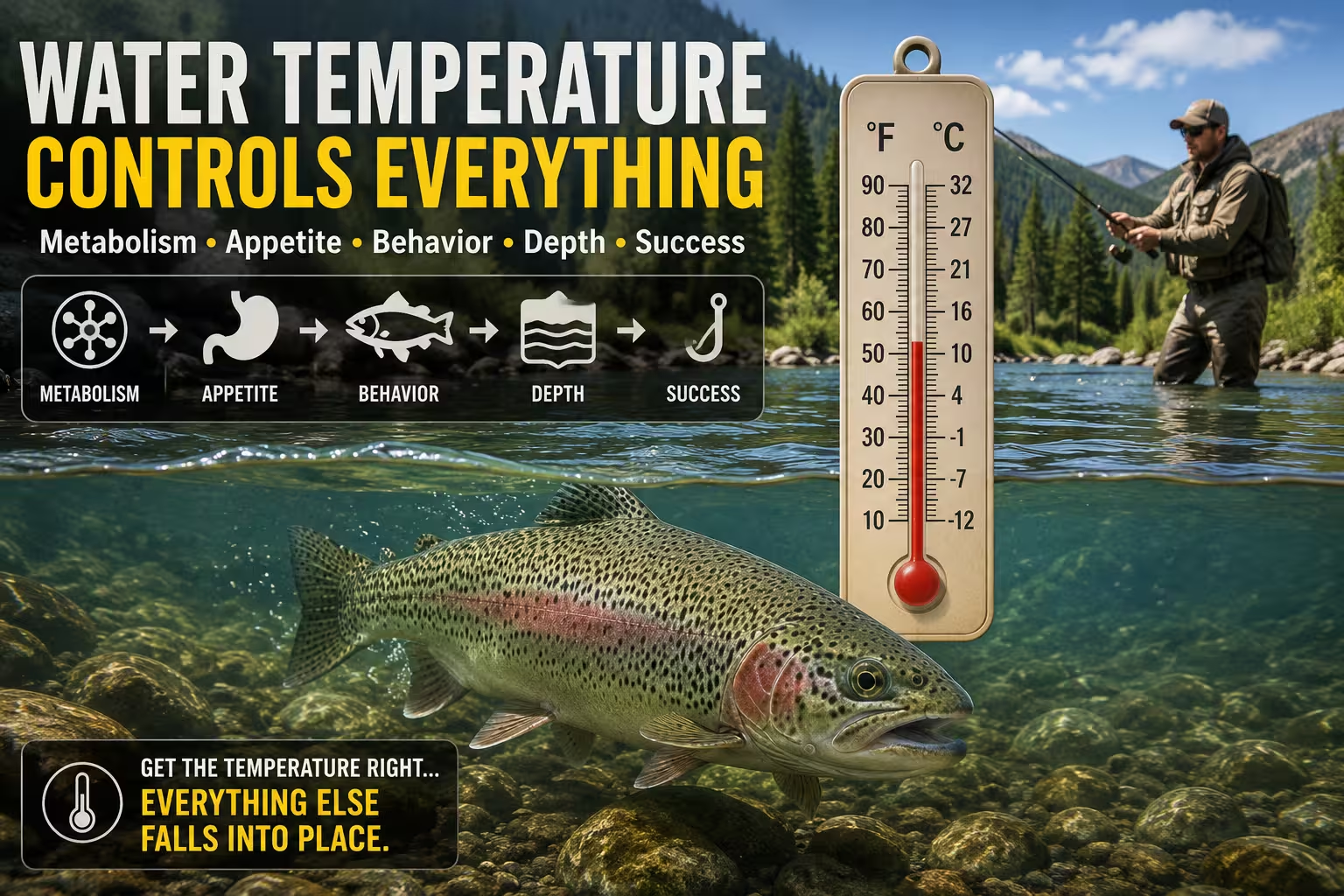
This is also why crawfish predation doesn’t behave like baitfish predation on the calendar. Baitfish chasing tracks a trout’s willingness to burn energy on pursuit — which is why it peaks in fall and drops off hard in winter. Crawfish predation tracks something different: crawfish vulnerability. A trout doesn’t need to be in an aggressive, high-metabolism state to eat a crawfish that’s already cornered or freshly molted. It just needs the opportunity to present itself, which makes crawfish a more opportunistic, structure-driven food source than a metabolically-driven one, even though water temperature still plays a real role, as we’ll get to below.
Which Trout Actually Target Crawfish
Not every trout in a stream is eating crawfish with the same frequency, and the pattern here closely mirrors what we described in the minnows post: size and species both matter enormously.
Brown trout are, without much competition, the most committed crawfish predators among the trout species most American anglers encounter. As brown trout mature, their diet shifts hard toward higher-protein, higher-effort prey, and crawfish are disproportionately represented in the stomach contents of larger browns compared to rainbows or brookies of similar size in the same water. Part of this comes down to feeding style: browns are notorious for holding tight to cover — undercut banks, log jams, deep pools with structure — and feeding more after dark or in low light, which is almost a perfect behavioral match for crawfish, themselves structure-oriented and most active during those same windows. It’s not a coincidence that the biggest browns in a lot of systems are taken on crawfish patterns fished slow and tight to structure after sundown.
Rainbow trout eat crawfish too, but more opportunistically and typically at a smaller scale — juvenile crawfish in roughly the half-inch to inch-and-a-quarter range show up regularly in rainbow diets, especially in systems where insect activity drops off in midsummer and rainbows need something to fill the gap between hatches. A twelve-inch rainbow isn’t likely to tackle a two-inch, hard-shelled adult crawfish with its claws up and ready — the size and defensive posture make that a poor risk-reward proposition for a fish that size. But that same rainbow will happily eat a small, freshly molted crawfish that offers no resistance at all.
Size is the variable that ties both of these patterns together, just as it did with baitfish. A trout needs a mouth and gut large enough to handle a crawfish’s rigid shell and, in the case of an intact adult, its claws. Smaller trout are limited to the smallest, softest crawfish available; as a trout grows, its gape increases and so does its willingness to tangle with a larger, harder-shelled crawfish — the same growth-driven shift in prey selection we described with baitfish, where the biggest fish in any piece of water are disproportionately the ones eating the biggest, most defended prey.
Water type plays a role too. Freestone streams with rock, rubble, and gravel bottoms tend to hold healthy crawfish populations and, correspondingly, trout that are well-practiced at hunting them. Spring creeks and tailwaters with silty or sandy bottoms and less rock cover generally hold fewer crawfish, and the trout in those systems lean more heavily on insects and, where present, baitfish. If you’re not sure how much crawfish predation matters on your home water, the substrate tells you almost everything you need to know before you ever turn over a rock — a rocky, rubble-strewn bottom is crawfish habitat, and crawfish habitat is where crawfish-eating trout concentrate.
The Molt Cycle: Why Timing Matters More Than Presence
Crawfish are present in most rocky trout streams essentially year-round, but their vulnerability to predation is not constant — and understanding why is the single most useful piece of biology in this entire post.
A crawfish’s shell is a rigid exoskeleton. Unlike a fish’s scales or a mammal’s skin, it can’t stretch or grow incrementally. To get bigger, a crawfish has to abandon its old shell completely in a process called molting, then hurry to grow and harden a new, larger shell before anything eats it. Juvenile crawfish molt frequently — as often as six to fourteen times in their first year — while mature adults molt only once to a few times annually, almost always concentrated in the warmer months when metabolism and growth run fastest.
The molt itself is the vulnerability event that predators are built around. In the hours immediately after shedding its old shell, a crawfish is soft-bodied, weak, and functionally unarmed — its claws, its primary defense and the part of its body most likely to deter a strike, are useless until the new shell hardens. A freshly molted crawfish can’t pinch, can’t grip a rock face to wedge itself into a crevice, and can barely manage the tail-flip that’s normally its only escape option. It hides if it can, but the ones caught out in the open during this window are about as close to a free meal as exists in a trout stream, and trout that share water with a healthy crawfish population learn to recognize and exploit that window.
This has a direct, practical consequence for how you fish a crawfish imitation. Warm-season molt windows — broadly, late spring through summer — are when a soft, natural-colored pattern fished slow and low is most likely to draw a confident, committed strike, because it matches exactly the kind of prey trout are keying on. Outside of active molt periods, crawfish are hard-shelled, defended, and considerably more willing to stand their ground, which changes both the odds of a strike and its character — a crushing, decisive take on a hard-shelled adult versus an easy inhale of a soft one.
Cold water slows this cycle to a crawl. In winter, crawfish activity and molting drop off sharply, and many retreat into bank or streambed burrows to sit out the cold. This doesn’t remove crawfish from a trout’s diet entirely — a slow-moving, cold-stressed crawfish caught away from its burrow is still an easy target — but it does reduce how many vulnerable crawfish are available and how many trout are actively hunting for them. As with baitfish in cold water, crawfish patterns still work in winter, but the presentation needs to shrink and slow down to match reduced activity on both ends.
Why Crawfish Change Color — and Why It Matters to a Feeding Trout
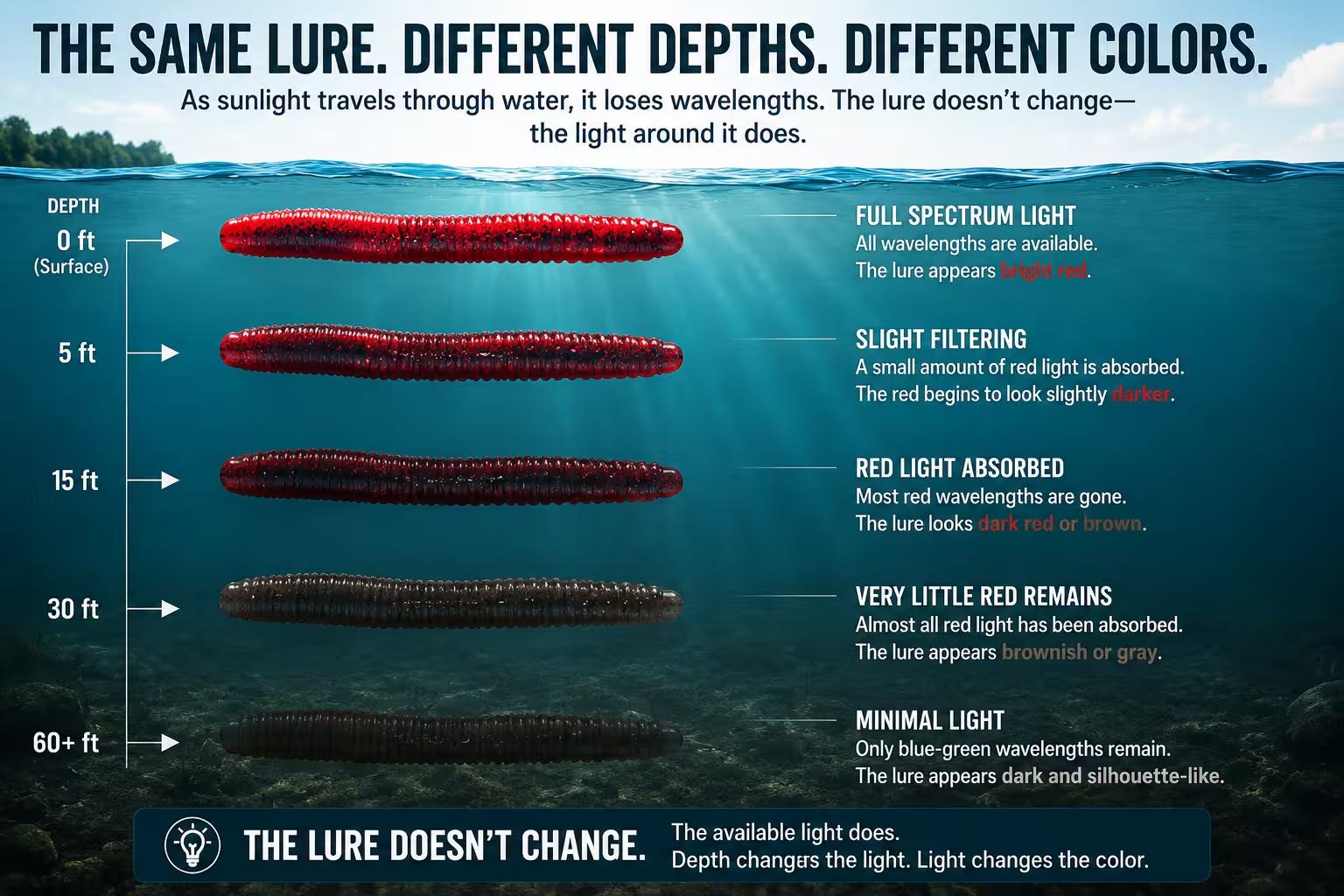
We’ve written before about the chemistry behind crawfish coloration in The Crawfish Connection, but it’s worth revisiting here specifically through the lens of what a trout actually sees and responds to, because color is one of the most misunderstood variables in crawfish pattern selection.
A crawfish’s natural color comes primarily from a pigment called astaxanthin, the same carotenoid responsible for the color of shrimp, lobster, and salmon flesh. In a healthy, undisturbed crawfish, that pigment is bound to a protein called crustacyanin, which physically distorts the pigment molecule and shifts its apparent color away from red and into the muted olive, brown, and rust tones that let a crawfish blend into a streambed. It’s an effective camouflage system — which is exactly the point. A crawfish that stands out is a crawfish that gets eaten, so natural selection has spent a long time optimizing crawfish coloration for the opposite outcome.
That camouflage bond is fragile, though, and it breaks under stress. Molting is one of the biggest stressors a crawfish experiences, and the color shift that comes with it is dramatic: freshly molted crawfish often run pale tan or cream before darkening, and crawfish under acute stress — including the stress of being pursued by a predator — can flash brighter orange and red tones as the pigment-protein bond is disrupted. In other words, the same biological event that makes a crawfish defenseless also tends to make it more visible. From a trout’s perspective, color and vulnerability are correlated in the real prey it encounters, which is worth remembering when you’re deciding what to tie on.
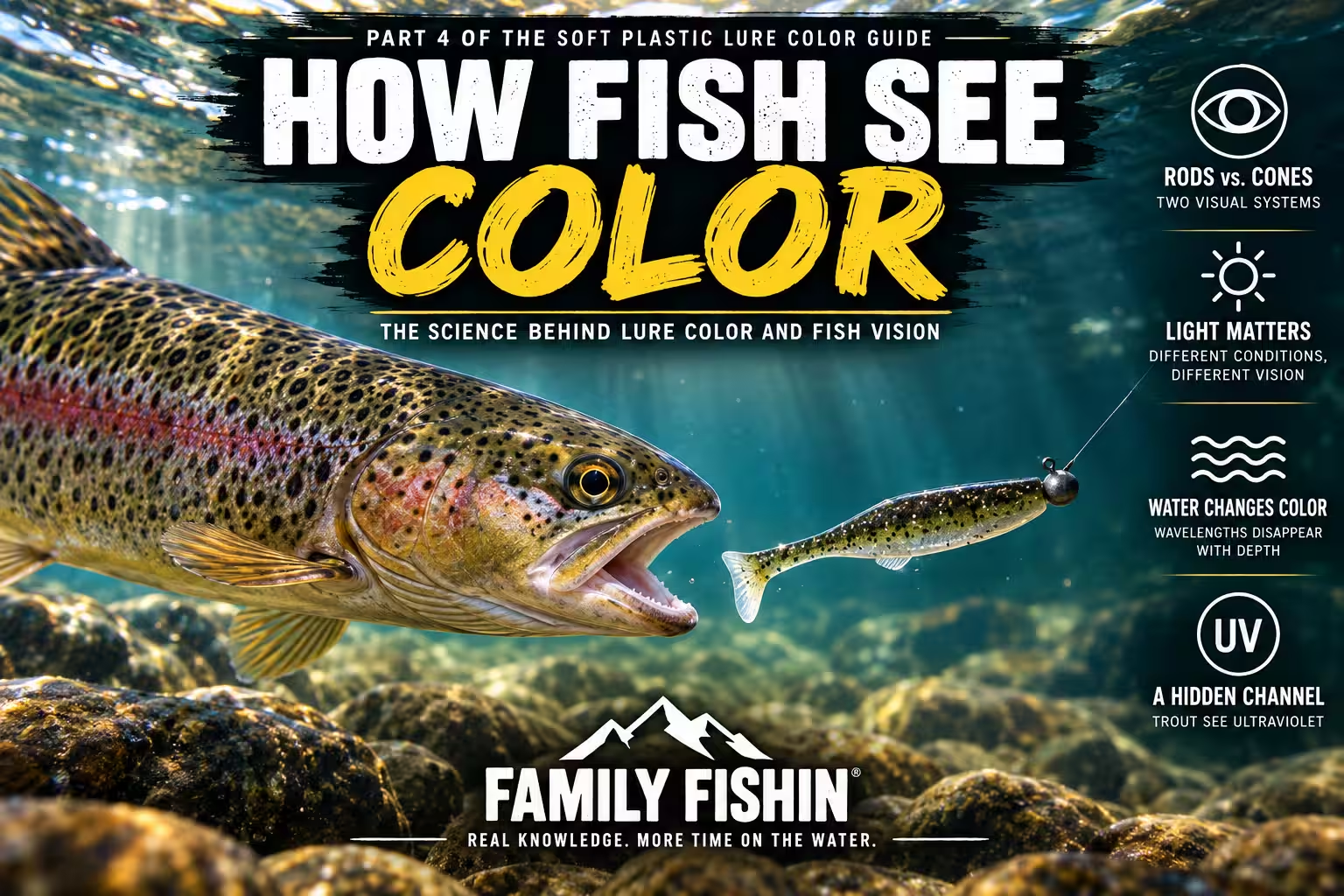
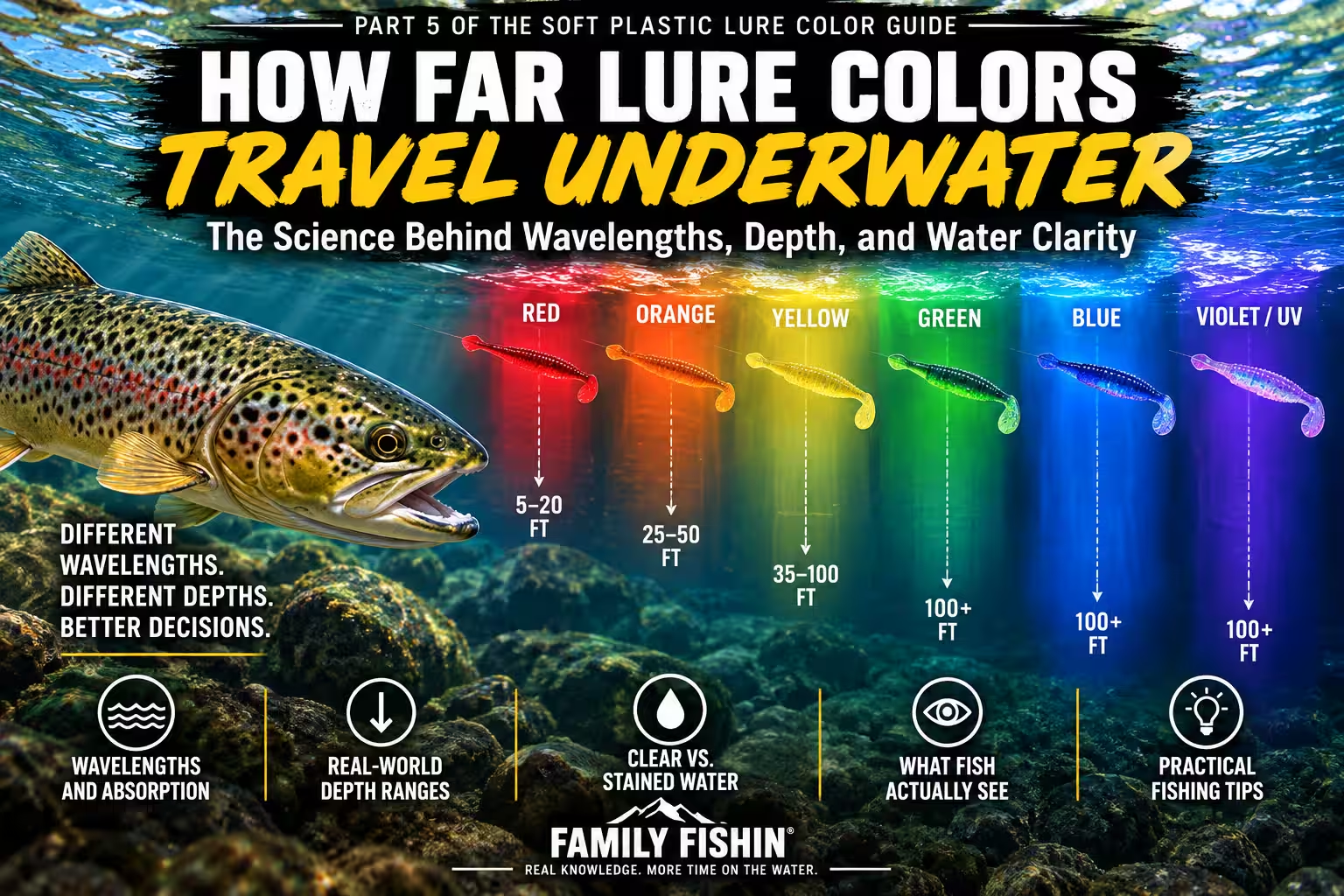
This is where the two-mode approach to crawfish color comes from, and it runs counter to a lot of anglers’ instinct to always “match the hatch.” A natural-toned pattern — olive, brown, rust, muted amber — imitates a healthy, hard-shelled adult going about its business, and it’s the better call in clear water where a trout gets a long look and time to grow suspicious. A bright pattern — orange, red, or hot pink — doesn’t imitate a calm crawfish at all; it imitates a stressed, molting, or fleeing one, and functions less as camouflage-matching and more as direct provocation. In stained water, low light, or when fish are actively feeding, a bright craw pattern can outperform a natural one precisely because it mimics the visual signature of an easy, distressed meal.
Pale, cream-colored patterns deserve their own mention, since they’re often overlooked in favor of the natural-versus-bright binary. A pale pattern fished during a known warm-season molt window imitates the freshest, most defenseless version of the prey a trout can encounter, and can outproduce both the natural and bright ends of the spectrum during an active molt.
Structure and bottom color also shape a crawfish’s baseline shade — those over dark, silty bottoms run darker, those over pale gravel run lighter. Matching your natural-toned pattern to the actual substrate color of the water you’re fishing, rather than a generic idea of “crawfish brown,” measurably improves how convincing the imitation looks.
When Crawfish Predation Peaks for Trout
Crawfish predation doesn’t follow the same calendar as baitfish predation, and it’s worth being explicit about how the two differ, since it changes when you should prioritize each style of presentation.
Late spring through summer is the strongest window for crawfish predation overall, and it’s driven by the overlap of two separate factors. First, warming water accelerates the crawfish molt cycle, flooding the system with soft, vulnerable individuals at a higher rate than any other time of year. Second, this window frequently overlaps with a natural lull in aquatic insect hatches during the hottest stretch of summer — the same lull we described in our seasonal diet post, where trout metabolism stays elevated by warm water but insect availability drops. Crawfish step in to fill that gap. This is part of why summer, often written off as a slow season for trout fishing generally, can actually be one of the best times of year to fish a crawfish pattern specifically, especially during the low-light hours when both crawfish and trout are most comfortable being active in warm water.
Spring, as water starts to warm out of winter dormancy, sees crawfish become increasingly active as they emerge from winter burrows and begin the year’s first molts, giving trout an earlier, gentler version of the same opportunity that peaks more fully in summer.
Fall brings a partial overlap with the baitfish-driven feeding surge we described in our minnows post, but crawfish activity itself is declining as water cools and the molt cycle slows toward its winter pause. Trout in fall are still willing to eat a crawfish pattern, particularly one worked near structure where a late-season crawfish might still be caught in the open, but it’s baitfish, not crawfish, driving most of the aggressive feeding activity during this stretch.
Winter is the quietest period for crawfish predation, for reasons already covered — most crawfish are holed up in bank and substrate burrows, molting has essentially stopped, and the ones still moving are sluggish and cold-stressed. Trout will still eat a crawfish that wanders into range, especially one presented slowly and right on the bottom near likely burrow structure, but this isn’t a season to build a strategy around crawfish patterns the way summer is.
Time of day matters on top of season. Crawfish are more active during low light and after dark, which lines up closely with the low-light feeding windows that already tend to be a trout’s most productive hours generally. A crawfish pattern fished at dawn, dusk, or after dark near rocky structure is working with the grain of both the trout’s and the crawfish’s natural activity patterns, rather than against it.
How Trout Actually Hunt Crawfish
The mechanics of a trout hunting a crawfish look almost nothing like the mechanics of a trout hunting a minnow, and understanding that difference is what should actually change your presentation, more than color or pattern choice alone.
Baitfish predation, as we described in our minnows post, is an ambush-and-pursuit behavior — a trout holds in a current break and darts out to intercept a moving target, often following for some distance before committing. Crawfish predation is almost the opposite. Because crawfish stay tied to bottom structure rather than swimming through open water, trout hunting them behave more like a predator methodically working a piece of cover — nosing along rock faces, working the edges of a log jam, probing into gaps between boulders — than one waiting in open current for prey to arrive.
The strike itself also differs in character. A crawfish’s primary defense, when it isn’t freshly molted, is its claws, raised in a posture that can genuinely deter a strike from a trout unwilling to risk a mouth full of pincers. Against a defended, claws-up adult, a trout often approaches cautiously and either strikes decisively enough to disable the crawfish before it can pinch, or holds back if the risk outweighs the reward. Against a fleeing or already-disabled crawfish — one that’s lost a claw, is freshly molted, or has been flipped onto its back — the strike tends to be immediate and far less hesitant.
This is the biological logic behind the lift-drop retrieve that’s become the standard technique for fishing crawfish imitations. A crawfish’s only escape mechanism is a short, backward tail-flip that covers a few inches before it has to settle back onto the bottom and reorient. Lifting a jig or soft plastic craw off the bottom and letting it fall back imitates that motion far more convincingly than a steady swim, and the pause after the drop mimics the moment a real crawfish is reorienting and briefly vulnerable again — exactly the stimulus a trout hunting structure for crawfish is primed to react to.
Water depth and clarity shape this interaction much as they do with baitfish. In clear, shallow water, a trout gets a long look before committing, which raises the bar on realistic profile and claw movement. In deeper or more turbid water, a trout relies more on vibration and silhouette than fine detail, which is part of why a bulkier, more active soft plastic can outperform a more detailed but less mobile one.
Color, Profile, and What Actually Triggers the Strike
Building on the color science above, it’s worth being specific about what a trout is actually weighing when it decides whether to strike a crawfish or a crawfish imitation, because not every visual cue carries equal weight.
Claw posture is one of the most important and most overlooked cues in crawfish pattern design and presentation. A crawfish with claws raised and forward reads as defended and alert; a crawfish with claws trailing or missing reads as disabled or fleeing. A soft plastic craw rigged and retrieved so its appendages trail naturally behind it during the fall phase of a lift-drop retrieve is unconsciously signaling vulnerability to a trout in a way that a stiff, static claws-forward presentation doesn’t.
Size selection follows a similar logic to what we described for baitfish: trout tend to key in on crawfish sizes proportional to their own size and hunting confidence, and a pattern that’s dramatically oversized relative to the crawfish actually present in a given piece of water can get refused even by large trout, simply because it falls outside the size range those fish are used to encountering and successfully handling. Turning over a few streamside rocks before you start fishing tells you more about the right size to throw than any general rule of thumb.
Movement and fall rate matter as much as color, and arguably more, particularly in stained or low-light conditions where fine visual detail is harder for a trout to resolve. A soft plastic that flutters and kicks its appendages naturally on the drop — rather than sinking like a stone — does a far better job selling the illusion of a living, threatened crawfish than a lure with perfect paint but a lifeless fall.
Color, as covered above, functions on two tracks: natural tones to imitate a healthy, hard-shelled crawfish in clear water and low fishing pressure, and bright or pale tones to provoke a reaction or match a molting, distressed individual in stained water or during known molt windows. Neither approach is universally correct — reading water clarity and season is what tells you which mode to fish.
Fishing Crawfish Imitations for Trout Effectively
Putting the biology to work, a few practical principles consistently improve results when you’re specifically targeting trout with crawfish patterns.
Fish the bottom, and fish it tight to structure. Crawfish don’t swim through open water, and a crawfish imitation worked anywhere but along the bottom near rock, rubble, wood, or undercut banks isn’t imitating anything a trout actually recognizes as food. This is a fundamentally different presentation zone than baitfish fishing, which can effectively cover the water column — crawfish fishing lives almost entirely in the bottom few inches.
Use a lift-drop retrieve rather than a steady swim or a straight drag. Lift the lure a few inches off bottom, let it fall back on a controlled semi-slack line so you can feel and see the take, and pause briefly before lifting again. This mimics the natural tail-flip escape and reorientation cycle of a real crawfish far more convincingly than continuous motion.
Match your color strategy to water clarity and season rather than defaulting to a single go-to pattern. Natural olive, brown, and rust tones in clear water and outside of major molt windows; pale cream or tan during known warm-season molt periods; bright orange, red, or pink in stained water or when you want to provoke a reaction rather than imitate a calm, undisturbed crawfish. For anglers fishing soft plastics for trout specifically, a compact pattern like our 1″ Soft Plastic Crawfish is sized to imitate the juvenile crawfish that make up the bulk of what smaller and mid-sized trout are actually eating, and works well rigged on a micro jig head, float-and-fly setup, or light drop-shot for exactly this kind of bottom-focused, structure-tight presentation.
Prioritize low light. Dawn, dusk, and after-dark hours line up with peak crawfish activity, and fishing a crawfish pattern during these windows puts your presentation in sync with when both the prey and the trout hunting it are most active and most willing to commit.
Target brown trout water specifically when trophy fish are the goal. Given how strongly brown trout key in on crawfish compared to other trout species, water known to hold larger browns — deep pools with structure, undercut banks, log jams — is disproportionately likely to reward a well-fished crawfish pattern, especially after dark.
Adjust presentation speed and size to season the same way you would for any other food source. A slow, small, pale pattern makes sense in cold water or outside of molt windows, when crawfish themselves are less active and more defended. A slightly larger, more actively worked pattern makes sense during peak summer molt periods, when crawfish activity — and trout willingness to chase a more energetic presentation — both increase.
Don’t overlook crawfish as a searching pattern even outside of peak windows. Because crawfish predation is driven as much by opportunity and structure as by season, a well-placed crawfish imitation worked slowly through likely holding water can produce fish even during stretches when insect activity is the technically “correct” match-the-hatch choice — particularly for the larger, more opportunistic fish in a system that didn’t get big by being narrowly selective.
Frequently Asked Questions
Do trout actually eat crawfish, or is that mostly a bass thing?
Trout absolutely eat crawfish, and larger trout — especially brown trout — do so regularly. While crawfish are often associated with bass fishing, brown trout in particular are aggressive crawfish predators, and crawfish frequently show up as a major component of stomach contents in larger, established browns.
Which trout eat the most crawfish, rainbows or browns?
Brown trout target crawfish more consistently and at a larger size than rainbow trout do, largely because of overlapping structure-oriented, low-light feeding habits. Rainbow trout eat crawfish opportunistically, typically favoring smaller juvenile crawfish, especially when insect hatches slow down in midsummer.
When is the best time of year to fish crawfish patterns for trout?
Late spring through summer is generally the strongest window, driven by warming water accelerating the crawfish molt cycle and by a natural lull in insect hatches during the hottest part of summer. Low-light hours — dawn, dusk, and after dark — are productive nearly year-round.
Why do crawfish change color, and does it matter for lure selection?
A crawfish’s natural camouflage color comes from a pigment called astaxanthin bound to a protein that shifts it away from red into browns and olives. That bond breaks under stress, including the stress of molting, which is why molting or threatened crawfish often flash brighter orange and red tones — a cue worth matching with brighter patterns in stained water or during molt season.
What retrieve works best for crawfish imitations?
A lift-drop retrieve — lifting the lure off the bottom and letting it fall back with a brief pause — imitates the short, backward tail-flip a real crawfish uses to escape a threat far more effectively than a steady swim or drag.
Why does molting matter so much to how trout feed on crawfish?
A freshly molted crawfish has a soft shell, can’t use its claws to defend itself, and moves poorly, making it one of the easiest and most reliably available meals in a trout’s environment. Trout key in on these vulnerability windows, which cluster in the warmer months when molting is most frequent.
Should I fish crawfish patterns near the bottom or through the water column?
Almost always near the bottom. Crawfish don’t swim through open water — they stay tied to rock, gravel, and structure — so an effective imitation should be fished tight to the bottom and near cover rather than through open water like a baitfish pattern would be.
What color crawfish pattern should I start with?
In clear water outside of major molt periods, start with natural olive, brown, or rust tones that match a healthy adult crawfish. In stained water, low light, or during known molt windows, bright orange, red, or pink patterns can trigger more aggressive reaction strikes.
Closing Thought
Understanding why trout eat crawfish comes down to a simple trade-off: crawfish offer a relatively low-cost, low-risk meal when trout can catch them away from cover or during vulnerable molt periods. Crawfish never chase down a trout, and a trout never has to work very hard to catch one that’s already cornered against a rock or caught out mid-molt with no shell to protect it. That combination — low cost, low risk, and a decent enough calorie return — is exactly why crawfish earn a permanent, structure-bound place in the diet of larger trout, right alongside the insects that dominate a smaller trout’s world and the baitfish that dominate a big trout’s fall feeding binge. Fish the bottom, fish it slow, fish it tight to rock and wood, and pay attention to the molt calendar as closely as you’d pay attention to an insect hatch chart, and crawfish patterns will start producing the same kind of trophy-class trout that made this prey source worth writing about in the first place.
About Family Fishin
Family Fishin is a family-owned fishing tackle company dedicated to designing, testing, and producing high-quality fishing lures — inspired by generations of fishing tradition and driven by a passion for innovation. Every product is developed with one goal in mind: helping anglers spend more time doing what they love, catching fish and creating memories on the water.