The Science of Plastisol: Complete Guide to Soft Plastic Lure Materials
Plastisol is the material every soft plastic fishing lure is made from. Understanding it — what it is, how it behaves, how to work with it, and how it fails — is the difference between pouring baits that fish well and last, and pouring baits that tear, scorch, go brittle, or come out of the mold already compromised.
This page offers a comprehensive guide on plastisol applications in fishing tackle, detailing its benefits and usage techniques.Each article goes deep on one piece of the puzzle. Together they cover the full picture: the chemistry underneath, the physical behavior in the pot and in the water, and the bench knowledge that comes from pouring thousands of batches in the Ozarks.
What Is Plastisol?
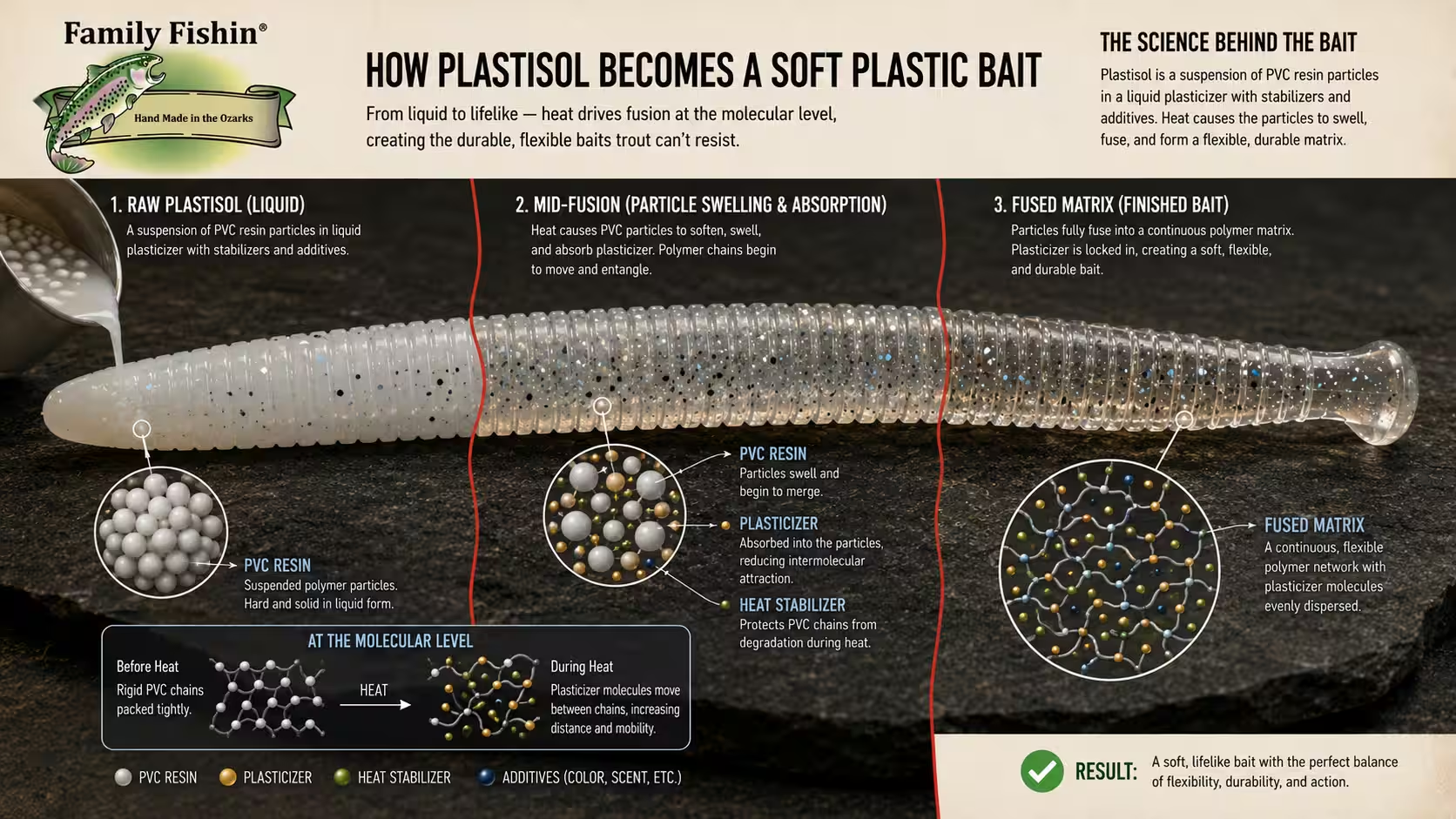
Plastisol is a suspension of PVC resin particles in a liquid plasticizer. At room temperature it pours like thick syrup. Heat it to around 170–180°C and the resin particles swell, absorb the plasticizer, and fuse into a solid, flexible material. Cool it down and you have a finished soft plastic bait. That transition — from liquid to solid through heat, with no chemical reaction and no byproducts — is what makes plastisol uniquely suited to small-batch lure making. You can heat it, fuse it, let it cool, and if something goes wrong, reheat it and start over. To a point.
The word plastisol comes up constantly in lure making circles, but it is worth being precise: it is not a single compound. It is a formulation — a starting base of PVC and plasticizer, with stabilizers, colorants, scent additives, salt, glitter, and other modifiers depending on what the bait needs. Every ingredient interacts with the others. Change the plasticizer ratio and you change softness, fall rate, and durability all at once. Add too much salt and you affect sink rate and tear strength. Understanding those interactions is what this series is about.
The Plastisol Series: Start Here
The articles below are organized by topic. If you are new to plastisol, start at the top and work down. If you have a specific question — why your plastic yellows, why your bait tears, why it goes stiff in cold water — use the headings to jump to the relevant section.
The Foundation
The Science of Plastisol: How Soft Lures Are Engineered for Action — The starting point. What plastisol actually is at the molecular level, how fusion works, and why every physical property of a finished bait traces back to decisions made in the formula.
Part 1 — What Are Soft Plastic Fishing Lures Made Of? — PVC, plasticizers, and why the ratio between them controls almost everything about how a bait behaves in the water and on the hook.
Action and Movement
What Actually Makes a Soft Plastic Lure Come Alive — The science of action: how softness, mass distribution, and hydrodynamics combine to produce movement that triggers strikes. Why two baits with the same shape can behave completely differently in the water.
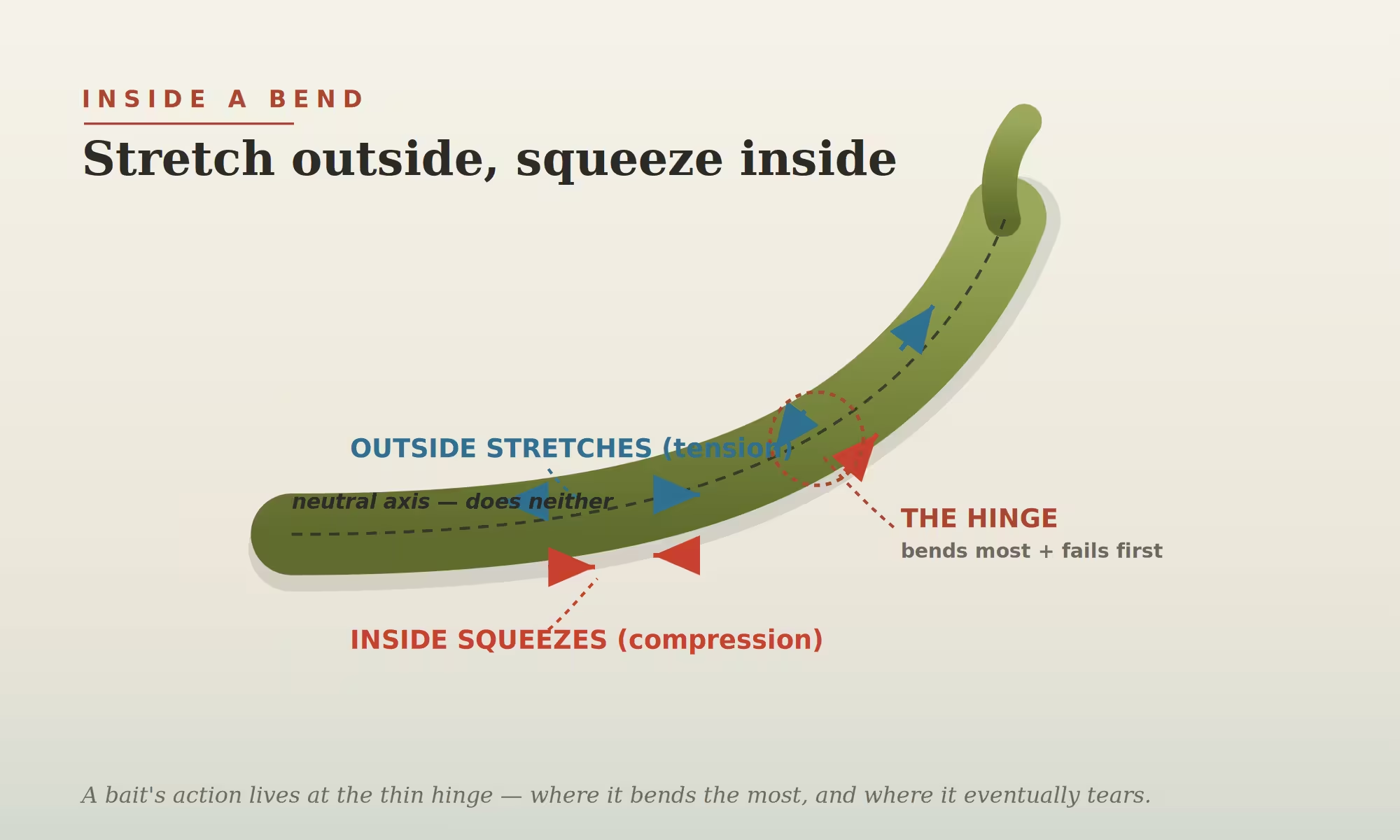
Why Soft Plastic Lures Bend the Way They Do — Flexural rigidity, neutral axis mechanics, and what actually happens when a fish inhales a soft plastic. Why softness and durability pull in opposite directions and how to find the right balance for your target species.
Part 2 — Soft Plastic Tail Design — Why tail geometry controls movement more than retrieval speed. The physics behind paddle tails, ribbon tails, and curly tails.
Part 3 — Soft Plastic Fall Rate Explained — How softness, salt loading, and density interact to control how a bait falls. The fall is often more important than the retrieve.
Material Properties
Part 2 — Plastic Softness vs Durability — The trade-off nobody explains clearly. Softer plastic feels better and produces more action, but it tears. Where to land for different applications.
Part 3 — Salt, Density, and Soft Plastic Lure Sink Rate — How salt loading changes density, fall rate, and bait feel. Why the same lure on the same jig head can fall at different speeds from different formulas.
Part 5 — Soft Plastic Scent Retention — Why some plastics hold scent for twenty fish and others lose it after two. How plasticizer choice affects scent release.
Part 6 — Soft Plastic Cold Water Performance — What cold water does to plastisol and why baits that fish well in summer go dead in winter. How to choose for cold conditions.
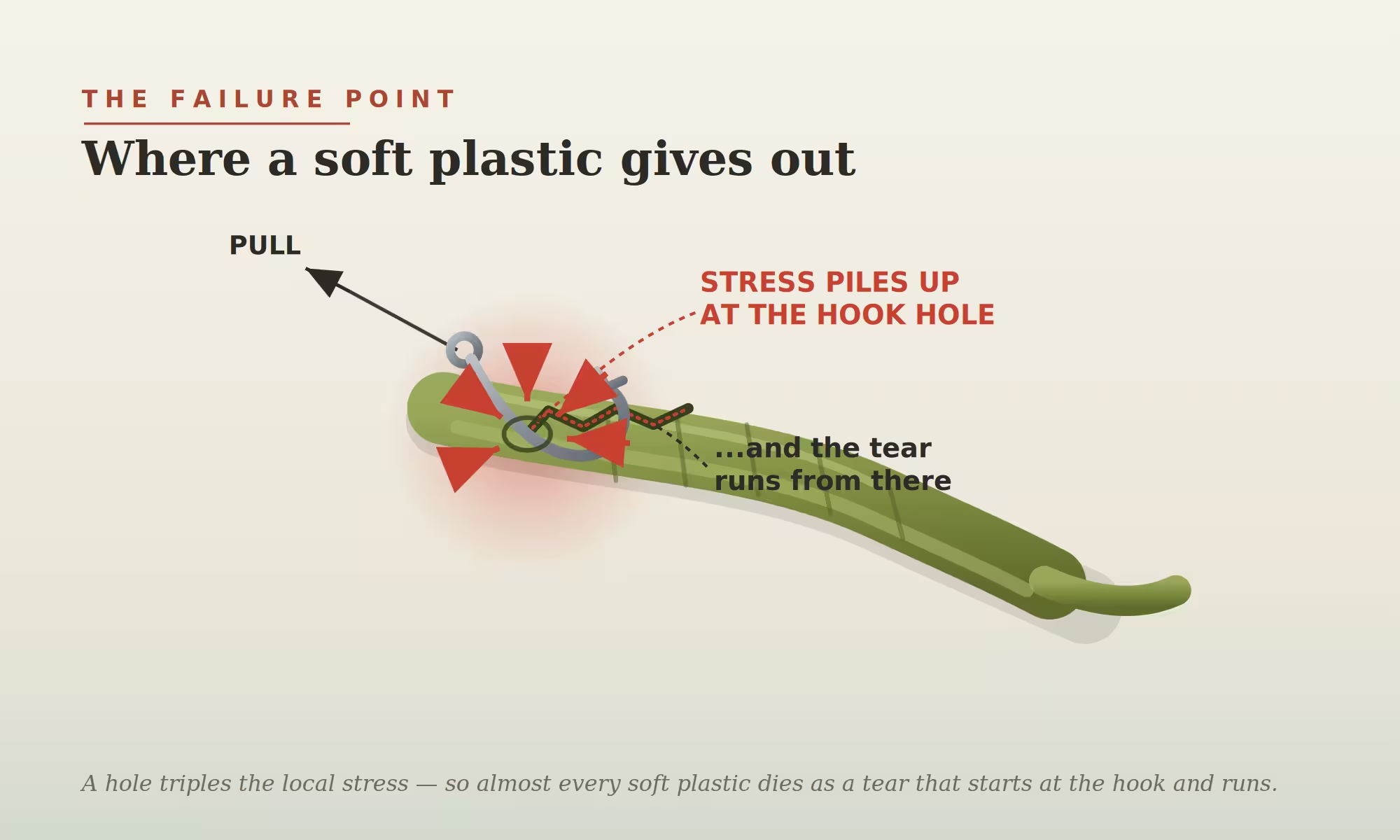
Why Soft Plastic Baits Tear — The mechanics of tear failure: why baits tear at the hook, on the hook set, against structure, and what formula and rigging choices reduce it.
Why Soft Plastic Baits Melt Together — Plasticizer migration and what happens to soft plastics in storage. How to store baits so they do not fuse, discolor, or degrade before you ever fish them.
Degradation and Failure
Why Plastisol Yellows, Smells, and Scorches — The chemistry of dehydrochlorination: why plastisol turns yellow, what that sharp acrid smell is, why you cannot reheat the same plastic forever, and how stabilizers work and fail. The most important safety and quality article in the series.
Color, Visibility, and Pigments
Glow-in-the-Dark Fishing Lures — How phosphorescent pigments work, why strontium aluminate outperforms zinc sulfide, and when glow actually matters in soft plastics.
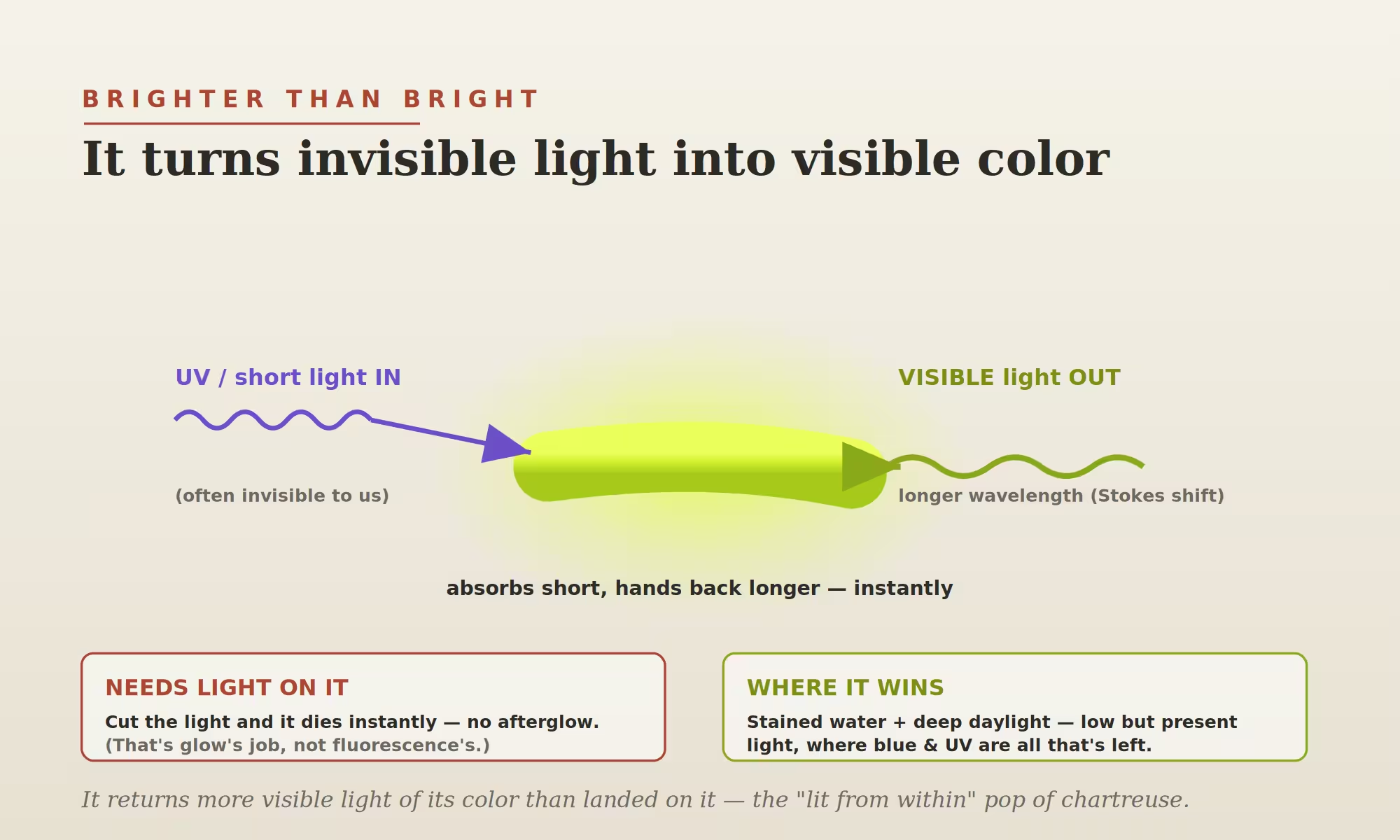
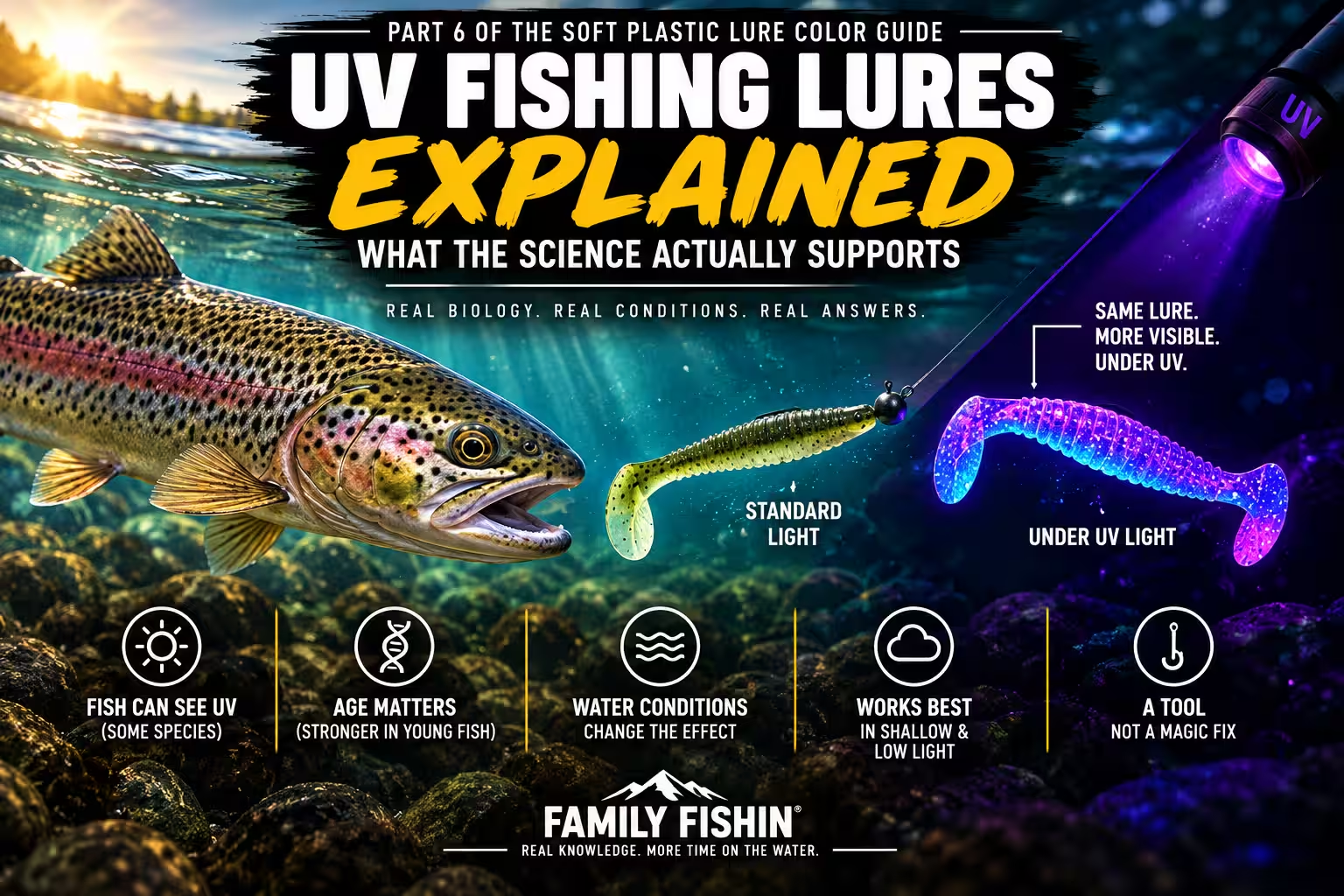
Why Fluorescent Lures Pop So Hard — Fluorescence versus UV reaction versus glow: three different mechanisms, three different use cases. Why chartreuse and hot pink look loud near the surface and what happens as they go deep.
Color-Changing Lures: How Photochromic Lures Work — The science of sun-activated color change. How photochromic molecules open and close in UV light, why the effect fades faster in warm water, and how to use it on the water.
Thermochromic Lures: How Temperature-Triggered Color Change Works — The heat-sensitive cousin of photochromic: baits that change color with water temperature instead of sunlight. How leuco dye systems work and what it means for fishing.
Selection, Design, and Performance
Part 4 — Soft Plastic Lure Visibility — Transparency, opacity, and how light behaves inside the bait. Why a translucent bait looks alive in clear water and when to use solid color instead.
Part 4 — Lure Profile and Silhouette — Why shape matters more than color in clear water. How silhouette is what fish usually see first, and why a wrong profile kills a bait even if the color is perfect.
Part 7 — Designed Soft Plastic Lures: Choosing Performance Over Hype — How to evaluate a soft plastic lure on what the formula actually does rather than packaging claims.
Part 7 — Soft Plastic Lure Selection System — How to build a systematic approach to choosing the right bait for the conditions. Species, water clarity, temperature, depth — how they narrow the choice.
Part 6 — Lure Depth and Strike Zone Explained — Why positioning in the water column matters more than color or action, and how plastisol properties affect depth control.
Why This Matters for Fishing
Most lure fishing is treated as a black box: try different colors and sizes until something works. That approach eventually works, but it is slow and it does not transfer. When you understand why a soft plastic behaves the way it does, you stop guessing and start making decisions. You know why the bait is going dead in cold water and what to swap to. You know why the fish are short-striking and what profile change fixes it. You know why one batch tears at the hook and another does not.
That is the purpose of this series. Not chemistry for its own sake — chemistry in the service of catching more fish.
Frequently Asked Questions
What is plastisol made of?
Plastisol is a suspension of PVC resin particles in liquid plasticizer, with heat stabilizers, colorants, and other additives depending on the formula. At room temperature it is liquid. Heated to around 170–180°C the resin fuses with the plasticizer to form a solid, flexible material.
Is plastisol safe to use?
Yes, when handled correctly. The main hazard is overheating, which releases hydrogen chloride gas. Good ventilation, temperature control, and a respirator appropriate for acid gases keep pouring safe. The fused, cooled bait is inert.
Why do soft plastic lures tear so easily?
Tear resistance is a function of formula — specifically the plasticizer-to-resin ratio and any toughening additives. Softer formulas tear more easily. Rigging also plays a large role: a hook that pinches the bait at a stress point will tear it far faster than one that distributes the load.
Why do soft plastics go stiff in cold water?
Plasticizers become less effective as temperature drops, reducing their ability to keep the PVC chains mobile. The result is a bait that loses flexibility and action in cold water. Formulas designed for cold water use plasticizers that stay effective at lower temperatures.
Can you reheat plastisol?
Yes, but each heat cycle degrades the stabilizer package slightly. Reheating many times eventually depletes the stabilizers, leaving the plastic prone to yellowing, brittleness, or sudden blackening. Limit reheats and consider adding a stabilizer additive if you regularly remelt leftover plastic.