Soft Plastic Lure Color Guide: How Fish Respond to Color
Understanding how fish respond to color is one of the most important skills in soft plastic fishing. Many anglers change lure colors constantly without understanding how fish perceive contrast, visibility, light penetration, and forage patterns under different conditions.. Anglers often change colors constantly without understanding how fish actually perceive contrast, visibility, light penetration, and forage patterns under different conditions.
The reality is that color does not act alone.
A lure’s effectiveness is influenced by water clarity, depth, available light, forage behavior, fish activity levels, and the lure’s ability to stand out from its surroundings. In some situations, color increases visibility. In others, it creates silhouette. In others, it helps trigger reaction strikes.
Understanding how these factors work together allows anglers to make intentional color choices instead of random adjustments.
This guide serves as a central resource for understanding soft plastic lure color selection. Each section links to a deeper article covering that specific factor in greater detail.
How Fish Respond to Color: The Quick Answer
If you remember only four things about lure color, remember these:
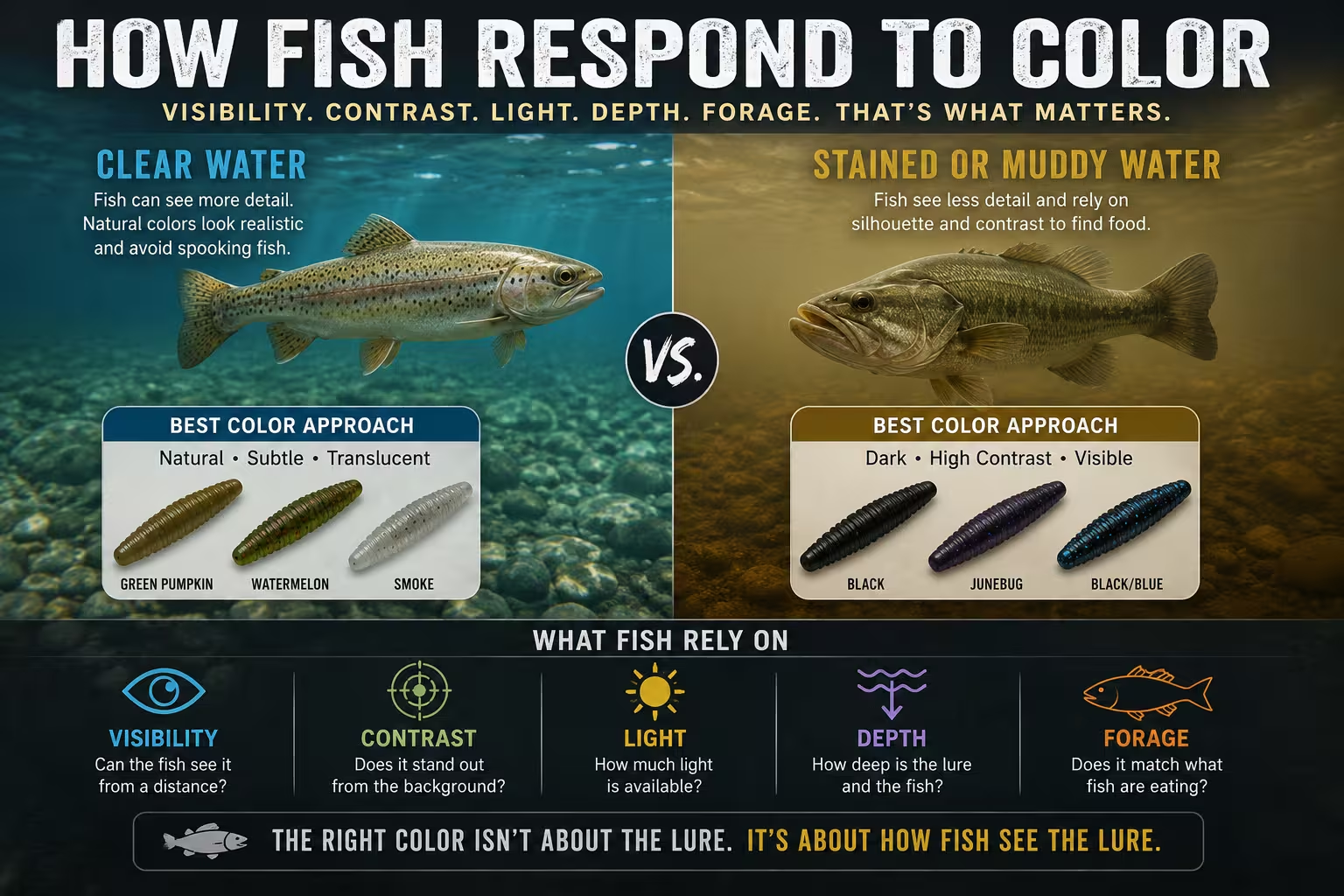
- Clear water: Natural and translucent colors generally work best.
- Stained water: Higher-contrast colors help fish locate the bait.
- Deep water: Silhouette becomes more important as colors lose visibility.
- Low-light conditions: Dark profiles often outperform bright colors.
Most lure color decisions become much easier once you evaluate water clarity, available light, and depth before choosing a color.
While specific patterns matter, visibility and contrast usually influence success more than the exact shade printed on the package.
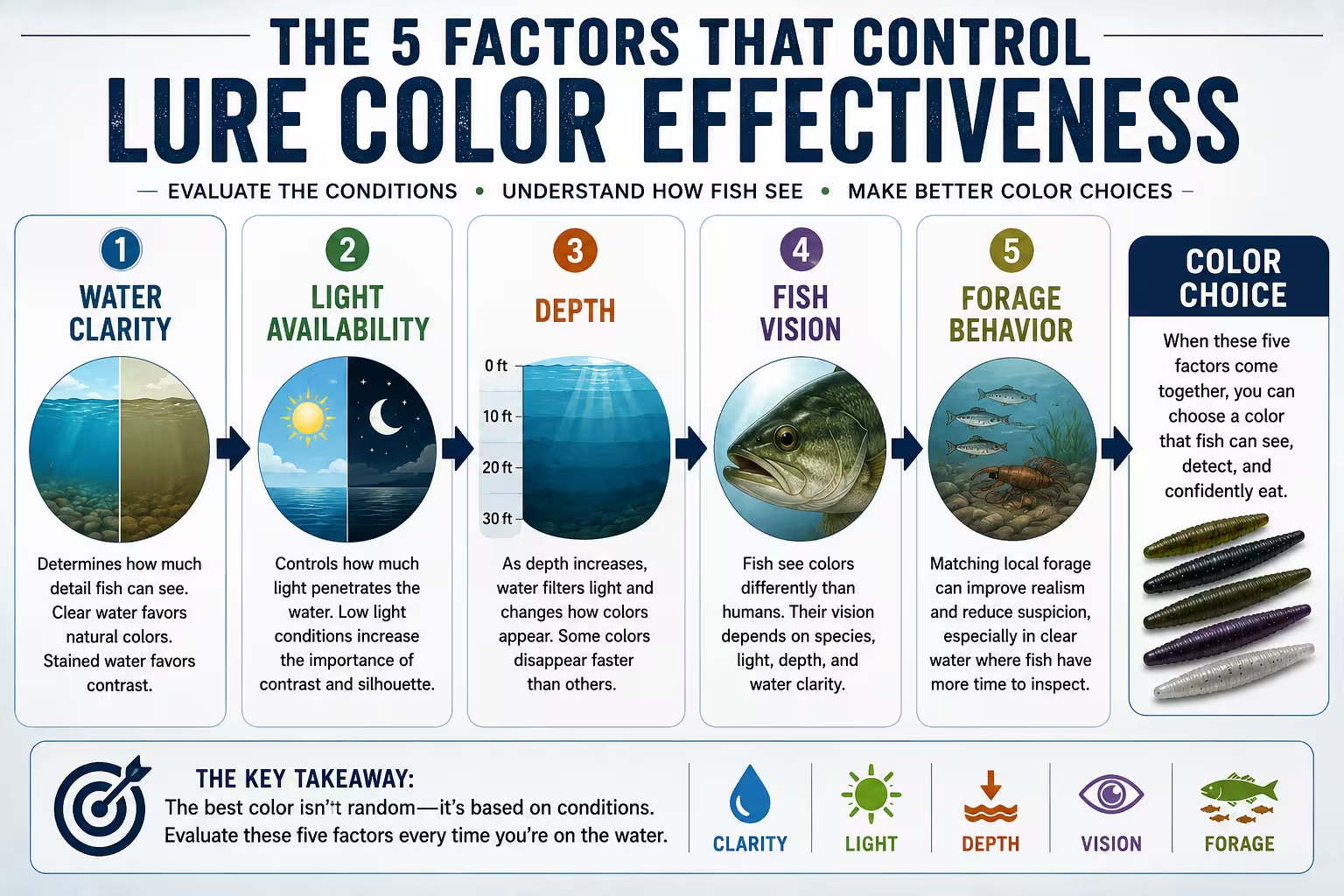
The Five Factors That Control Lure Color Effectiveness
Successful color selection is not about finding a single “best” color. It is about understanding the factors that determine how fish perceive a lure.
1. Water Clarity
Water clarity controls how much detail a fish can see.
In clear water, fish can inspect a lure closely, making natural colors and subtle presentations more effective. In stained water, stronger contrast often becomes more important than realism because fish have less time and visibility to evaluate the lure.
2. Light Availability
Cloud cover, time of day, season, and weather all influence how much light reaches the water.
Lower light levels generally favor stronger silhouettes and higher contrast. Bright conditions often allow more natural colors to perform effectively.
3. Depth
As depth increases, water filters light and changes how colors appear.
Some colors lose visibility quickly while others remain visible deeper in the water column. Understanding how depth affects color perception can significantly improve lure selection.
4. Fish Vision
Fish do not necessarily see colors the way humans do.
Different species have different visual capabilities, and those capabilities change depending on light conditions. What matters is not how a lure looks in your hand, but how it appears to a fish underwater.
5. Forage Behavior
Color selection should always be considered alongside local forage.
Matching the appearance of baitfish, insects, crawfish, or other prey can improve realism and reduce suspicion, particularly in clear water where fish have more time to inspect a presentation.
Every color decision discussed throughout this guide ultimately traces back to one or more of these five factors.
The One Rule That Solves Most Color Problems
Choosing the right soft plastic color doesn’t have to be complicated.
In fact, most successful color choices follow a few simple rules that work across species, regions, and water conditions.
Before getting into fish vision, UV reflectance, or underwater light absorption, it helps to start with the fundamentals.
Clear Water = Natural Colors
Dirty Water = Dark, High-Contrast Colors
That single rule explains why some colors work almost everywhere while others fail as conditions change.
Clear water allows fish to see details. Dirty water limits visibility, forcing fish to rely more heavily on silhouette, contrast, and movement.
Why Overthinking Color Hurts Results
Many anglers switch colors too often or chase every new color release instead of evaluating conditions.
Fish do not care what a color is called.
They care whether they can:
- See it
- Detect movement
- Recognize it as potential food
If a fish cannot detect your lure, the exact color becomes irrelevant.
The most productive anglers typically spend more time reading water conditions than changing colors.
Simple Color Starting Points
Clear Water
- Green Pumpkin (translucent)
- Watermelon
- Smoke
Stained or Muddy Water
- Black
- Junebug
- Black/Blue
These are not magic colors.
They are simply reliable visibility solutions that perform consistently under common conditions.
Understanding Contrast
High-contrast colors create stronger silhouettes that fish can detect quickly in low visibility conditions.
Low-contrast colors blend more naturally into clear water environments where fish have more time to inspect a presentation.
Neither approach is universally better.
The correct choice depends on the conditions.
Part 2: Fishing Lure Color Contrast Explained
Color contrast determines how clearly a fish can distinguish your lure from its surroundings.
In stained water, muddy water, or low-light conditions, stronger contrast generally improves visibility and detection.
In clear water, excessive contrast can sometimes appear unnatural and reduce effectiveness.
Understanding how contrast behaves in different conditions allows anglers to make more consistent color decisions.
Read the full guide:
Fishing Lure Color Contrast Explained – Why Fish Strike Some Soft Plastic Colors and Ignore Others
Part 3: Why Lure Colors Change Underwater
Light behaves differently beneath the surface.
As water filters light, certain wavelengths disappear faster than others. This changes how colors appear to fish.
In shallow water, most colors remain visible.
As depth increases or light decreases, color intensity shifts and contrast becomes increasingly important.
Understanding these changes improves lure selection across a wide range of fishing situations.
Read the full guide:
Why Lure Colors Change Underwater – How Depth and Light Affect Soft Plastics
Part 4: How Fish See Color
Fish do not perceive color the same way humans do.
Their ability to detect and differentiate colors depends on species, available light, depth, and environmental conditions.
Some colors remain visible across a wide range of conditions, while others fade rapidly as light availability changes.
Understanding what fish can realistically detect removes much of the guesswork from lure selection.
Read the full guide:
How Fish See Color: What Lure Colors Fish Can Actually Detect
Part 5: Why Some Lure Colors Stay Visible Deeper Than Others
Light does not penetrate water evenly.
As depth increases, certain colors disappear faster than others because their wavelengths are absorbed more quickly.
Red generally loses visibility first, followed by orange and yellow. Green and blue wavelengths often remain visible deeper.
Understanding these principles helps refine lure selection when fishing deeper portions of the water column.
Read the full guide:
Why Some Lure Colors Stay Visible Deeper Than Others
Part 6: UV Lures Explained
UV reflectance is one of the most misunderstood topics in fishing.
Some materials reflect ultraviolet light differently than standard lure pigments. Under certain conditions, this can increase lure visibility.
However, UV is not a universal solution.
Its effectiveness depends heavily on water clarity, available light, depth, and surrounding conditions.
Understanding when UV helps—and when it does not—allows anglers to use it more effectively.
Read the full guide:
UV Lures Explained: What UV Reflectance Is and When It Actually Works
Part 7: Best Soft Plastic Lure Colors for Consistent Results
Consistent color selection is not about memorizing specific patterns.
It requires evaluating:
- Water clarity
- Available light
- Depth
- Contrast
- Fish behavior
When these factors are understood and applied together, certain color categories perform reliably across similar conditions.
Applying these principles reduces random color changes and improves overall consistency on the water.
Read the full guide:
Best Soft Plastic Lure Colors for Consistent Results
Trout Application: Putting These Principles to Work
These color principles are not theoretical—they apply directly on the water.
If you want to see how contrast, seasonal changes, UV visibility, water clarity, and depth affect real fishing decisions, our trout-specific guide expands on those concepts using practical examples.
Read the full guide:
Best Trout Worm Colors for Every Season (Clear & Stained Water Guide)
The article covers:
- Seasonal color selection
- Clear-water strategies
- Stained-water strategies
- Color substitutions
- Habitat-specific adjustments
- Real-world trout applications
Frequently Asked Questions About Lure Color
What lure color works best in clear water?
In clear water, fish inspect baits more closely. Natural, translucent, and forage-matching colors typically outperform loud or opaque colors. Subtle contrast often produces more consistent results than high-visibility patterns.
What lure color works best in muddy water?
In muddy or heavily stained water, visibility becomes the priority. Dark silhouettes and high-contrast combinations help fish detect the lure more easily. UV-reflective materials can sometimes improve visibility under these conditions as well.
Do fish actually see color underwater?
Yes, but their perception depends on available light, depth, water clarity, and species-specific visual sensitivity. Fish often respond more strongly to contrast and silhouette than exact color.
Why do lure colors look different underwater?
Water filters light unevenly. As depth increases, some wavelengths are absorbed faster than others, causing colors to change appearance. This is why colors often look different underwater than they do above the surface.
Is UV important in fishing lures?
UV reflectance can increase visibility under certain conditions, particularly in stained water or low-light environments. However, it is not universally effective and works best when combined with proper color selection and presentation.
The Bottom Line
Color matters—but not for the reasons many anglers think.
The most successful anglers focus on visibility, contrast, depth, available light, and forage behavior. When those factors are understood, color selection becomes far more predictable and far less frustrating.
Instead of constantly changing colors at random, evaluate the conditions first:
- How clear is the water?
- How much light is available?
- How deep are you fishing?
- What forage are fish targeting?
- Is visibility or realism more important?
The guides in this series break down each piece of that puzzle in greater detail.
Together, they provide a complete framework for selecting soft plastic lure colors with confidence across virtually any fishing condition.
About Family Fishin
Family Fishin is a family-owned fishing tackle company dedicated to designing, testing, and producing high-quality fishing lures — inspired by generations of fishing tradition and driven by a passion for innovation. Every product is developed with one goal in mind: helping anglers spend more time doing what they love, catching fish and creating memories on the water.