Stocked vs Wild Trout: How to Adjust Your Presentation
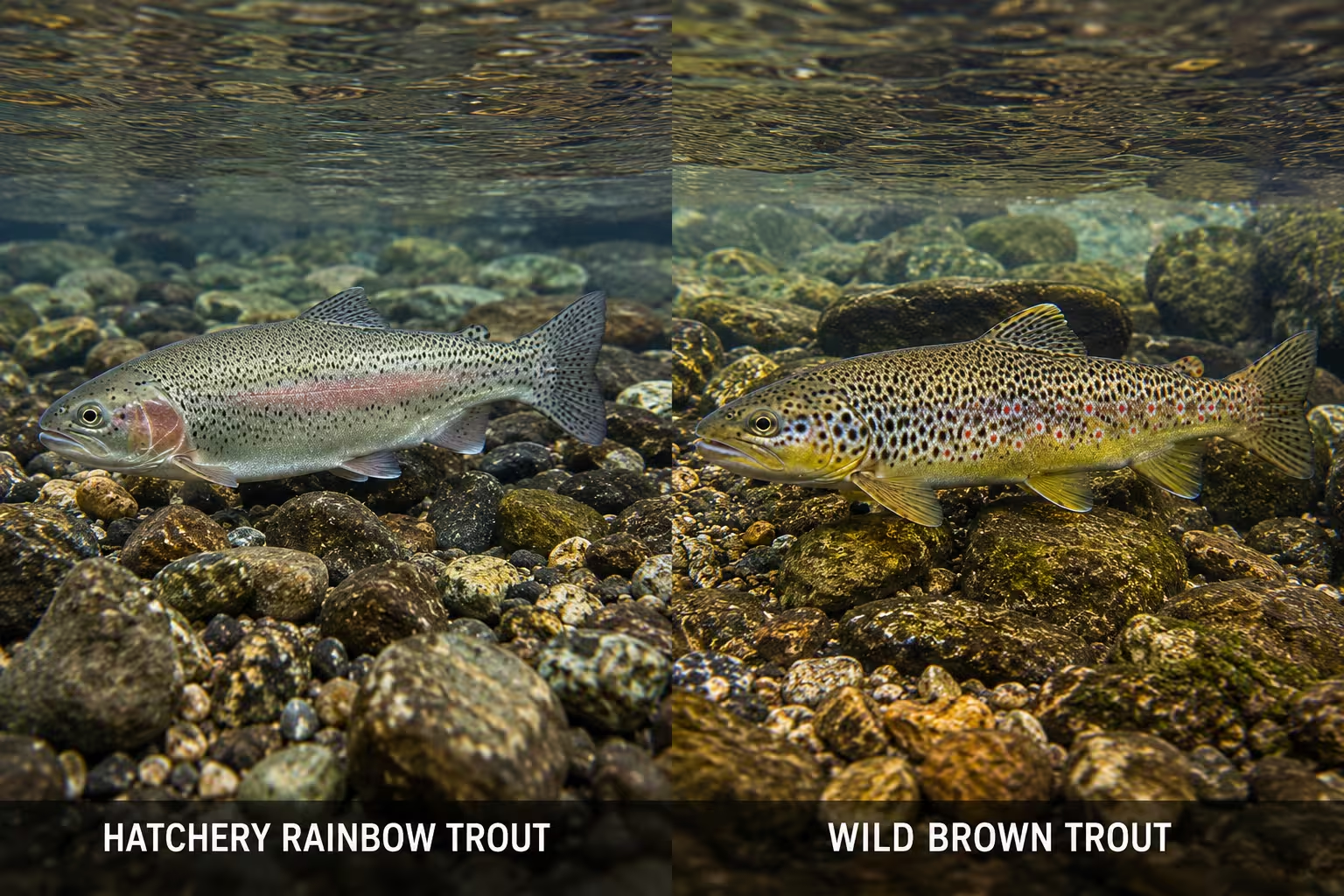
Understanding stocked vs wild trout is one of the fastest ways to improve your success on the water. Stocked and wild trout often swim in the same rivers, but they don’t behave the same way. but they don’t behave the same way, and anglers who understand the difference consistently catch more fish. A stocked rainbow fresh from a hatchery and a stream-born wild brown have lived completely different lives, and that history shapes how each one reacts to your lure. Match your presentation to the fish in front of you and your hookups go up. Use the same approach for both and you’ll spend a lot of days wondering why nothing’s biting.
Stocked vs Wild Trout: Understanding the Differences
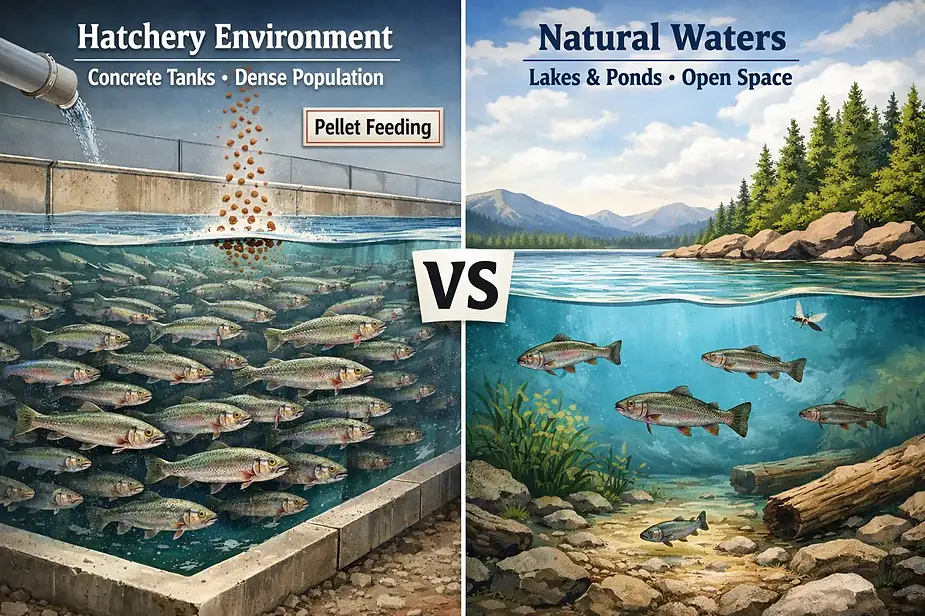
Hatchery trout grow up in concrete raceways, fed floating pellets on a schedule by people. They’ve never had to hunt, and for the first stretch of their life in the wild they don’t know to fear much. That makes freshly stocked trout aggressive and opportunistic — they’ll chase movement, flash, and bright color because, to them, anything that drops into the water might be food.
That naivety doesn’t last. Over their first days and weeks in a stream, stocked trout start getting caught, hassled, and pressured, and the survivors learn fast. They grow more cautious and more selective, gradually behaving more like wild fish the longer they’re out. So “stocked trout tactics” really means recently stocked trout — the window when they’re still acting like hatchery fish.
Best approach for stocked trout:
- Bright, high-visibility colors — chartreuse, pink, white
- Faster retrieves that trigger reaction strikes
- Simple, visible rigs: float setups or jig presentations
- Baits that stay easy to see in the water column
Why Wild Trout Are a Different Animal
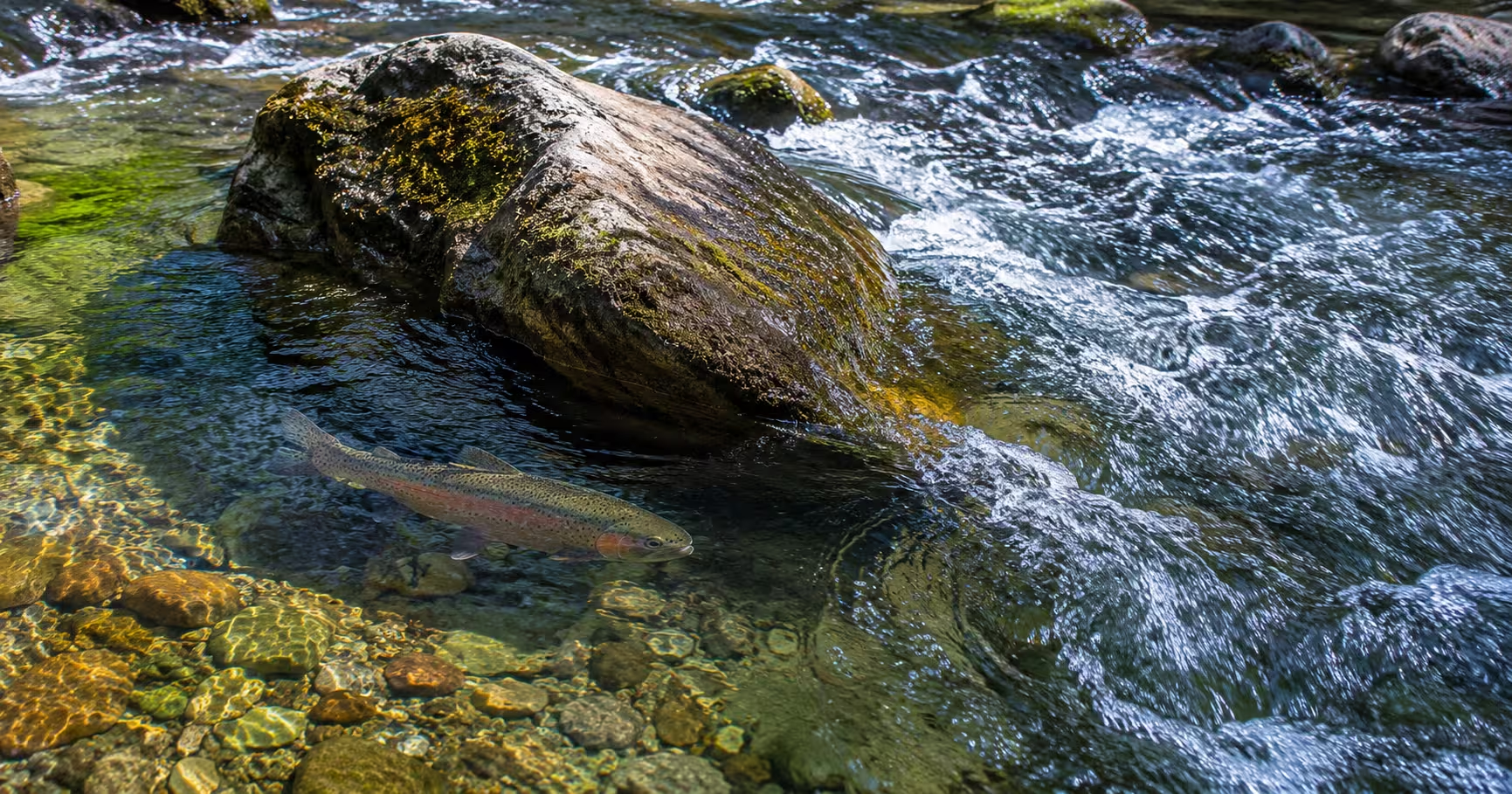
Wild trout were born in the stream and have spent every day of their lives hunting real food and dodging predators. That makes them cautious, selective, and quick to reject anything that looks or moves wrong. They key on natural forage — insects, nymphs, small baitfish — and they notice unnatural movement, heavy line, and clumsy presentation.
Best approach for wild trout:
- Natural, forage-matching colors — brown, olive, black
- Slow, subtle presentations
- Light line and finesse techniques
- Baits drifted naturally with the current
With wild fish, stealth and realism beat flash and speed nearly every time.
The Adjustments That Matter Most
The single biggest mistake anglers make is fishing both types of trout the same way. Here’s where to adjust:
| Factor | Stocked Trout | Wild Trout |
| Color | Bright, flashy | Natural, muted |
| Retrieve speed | Moderate to fast | Slow and subtle |
| Rigging | Simple and visible | Finesse and stealth |
| Line | 2–6 lb mono or fluoro | 2–4 lb fluorocarbon |
| Casting distance | Short to medium | Longer, to avoid spooking |
The changes look small, but they’re often the difference between a strike and a refusal.
One Lure That Bridges Both
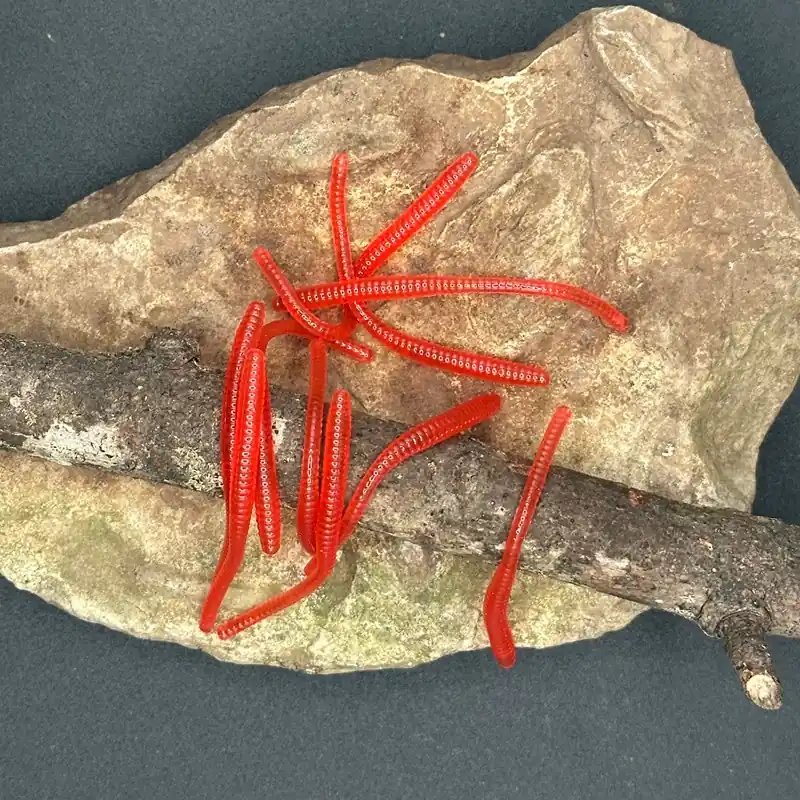
Some baits work for both stocked and wild trout when you adjust the presentation — and small soft-plastic trout worms are one of the most versatile options going. Because soft plastics let you control fall rate, drift, depth, and action, the same worm can imitate hatchery pellets one cast and natural forage the next, just by changing weight and retrieve speed.
A ribbed-body worm is especially adaptable: the ribs add subtle vibration in current, the color can be matched bright or natural to the fish you’re after, and it fishes on a drift, jig, or float rig. That lets you adjust to the fish without constantly swapping baits. For the full breakdown of plastic styles, colors, and rigging, see our guide: Best Soft Plastics for Trout.
Pro Tip: Let the Fish Tell You
Start with the presentation that matches the trout you expect — bright and quick for fresh stockers, natural and slow for wild fish — then adjust based on what they do. If stocked trout ignore bright colors, slow the retrieve or shift to something more natural. If wild trout refuse a natural drift, try a touch of color contrast or a slightly faster swing. The best anglers aren’t locked into one approach; they read the fish and adapt.
The biggest lesson from studying stocked vs wild trout is that presentation matters. The fish may share the same water, but they often respond to completely different approaches.
Frequently Asked Questions
Are stocked trout easier to catch than wild trout?
Usually, yes — at least at first. Recently stocked trout have little experience with predators or lures, so they’re less cautious than stream-raised wild fish.
How long do stocked trout behave differently from wild trout?
Typically for the first few weeks after stocking. As they get pressured and learn, they become more selective and start behaving more like wild trout.
Do wild trout prefer different lure colors?
Generally yes. Wild trout tend to respond better to natural colors that resemble insects, minnows, and other real forage.
Can the same lure catch both stocked and wild trout?
Yes. Many lures catch both if you adjust the presentation. Retrieve speed, color, and depth often matter more than the lure itself.
What’s the best line for trout fishing?
Light line improves presentation and lowers visibility. Most trout anglers run 2–6 lb monofilament or fluorocarbon, going lighter in clear or pressured water.
Final Thoughts
Stocked and wild trout can look nearly identical and still demand opposite approaches. Stocked fish reward bold color and movement; wild fish reward subtlety and realism. Learn to read which one you’re dealing with — and adjust color, speed, and rigging to match — and you’ll catch more in both worlds.
About Family Fishin
Family Fishin is a family-owned fishing tackle company dedicated to designing, testing, and producing high-quality fishing lures — inspired by generations of fishing tradition and driven by a passion for innovation. Every product is developed with one goal in mind: helping anglers spend more time doing what they love, catching fish and creating memories on the water.
Tags: #stocked trout #wild trout #trout fishing #trout presentation #soft plastics for trout