Best Trout Worm Sizes (When Size Matters)
The best trout worm size changes with conditions. A complete guide to small, medium, and large profiles — plus the trimming technique that turns follows into strikes without changing baits.
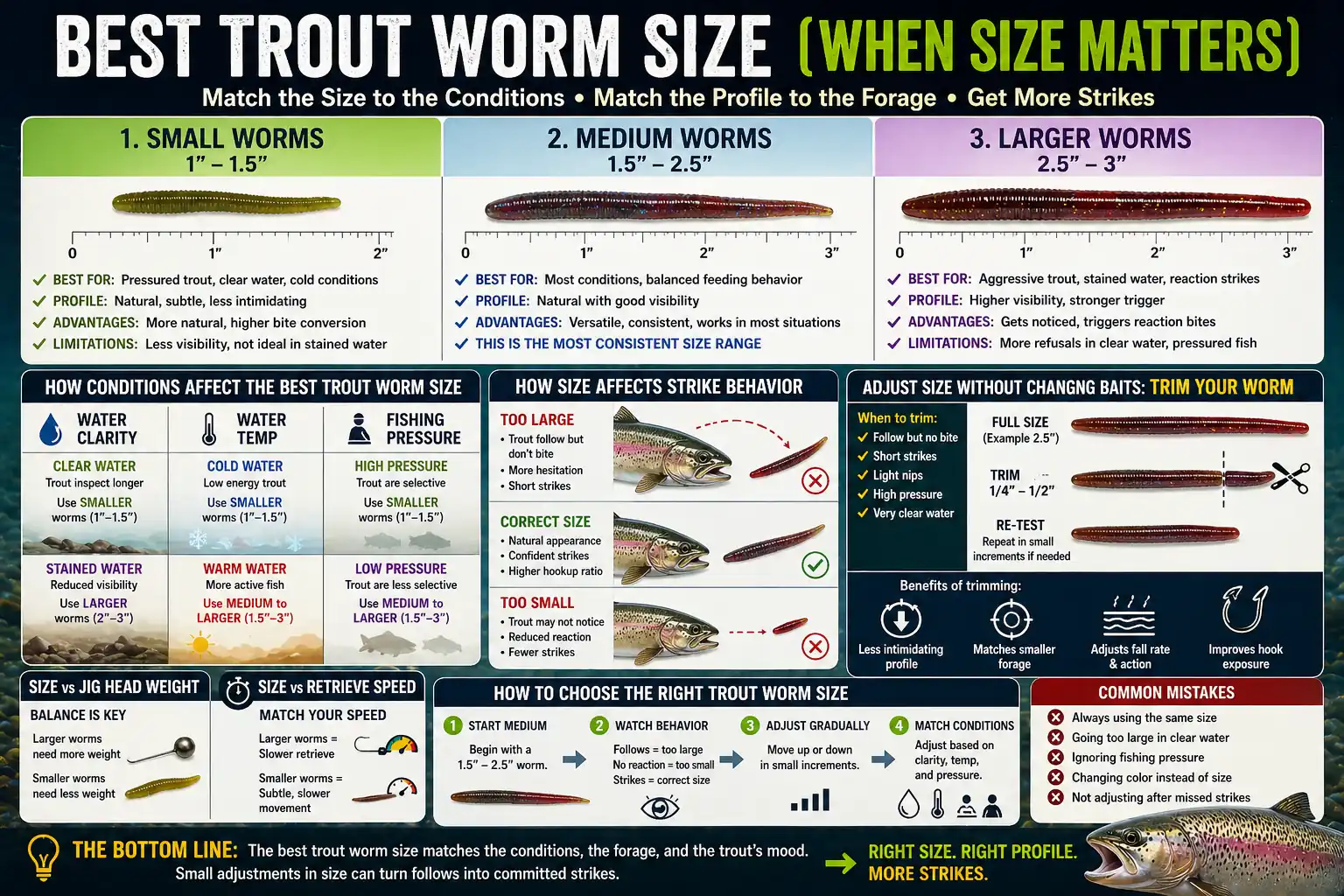
The best trout worm size changes with conditions. A complete guide to small, medium, and large profiles — plus the trimming technique that turns follows into strikes without changing baits.
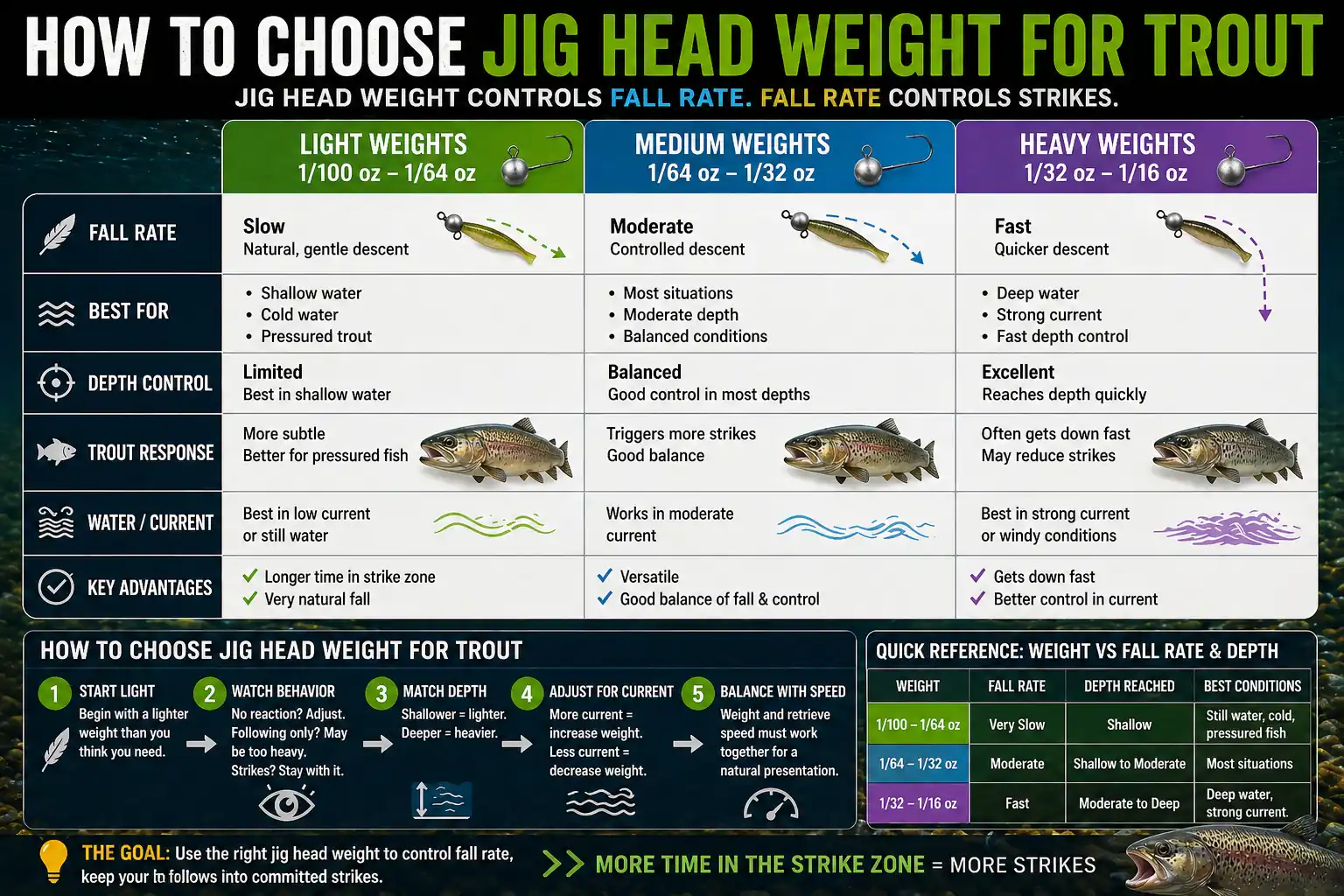
Jig head weight controls fall rate — too heavy drops past trout, too light never reaches them. A step-by-step system for selecting the correct weight based on depth, current, temperature, and trout behavior.
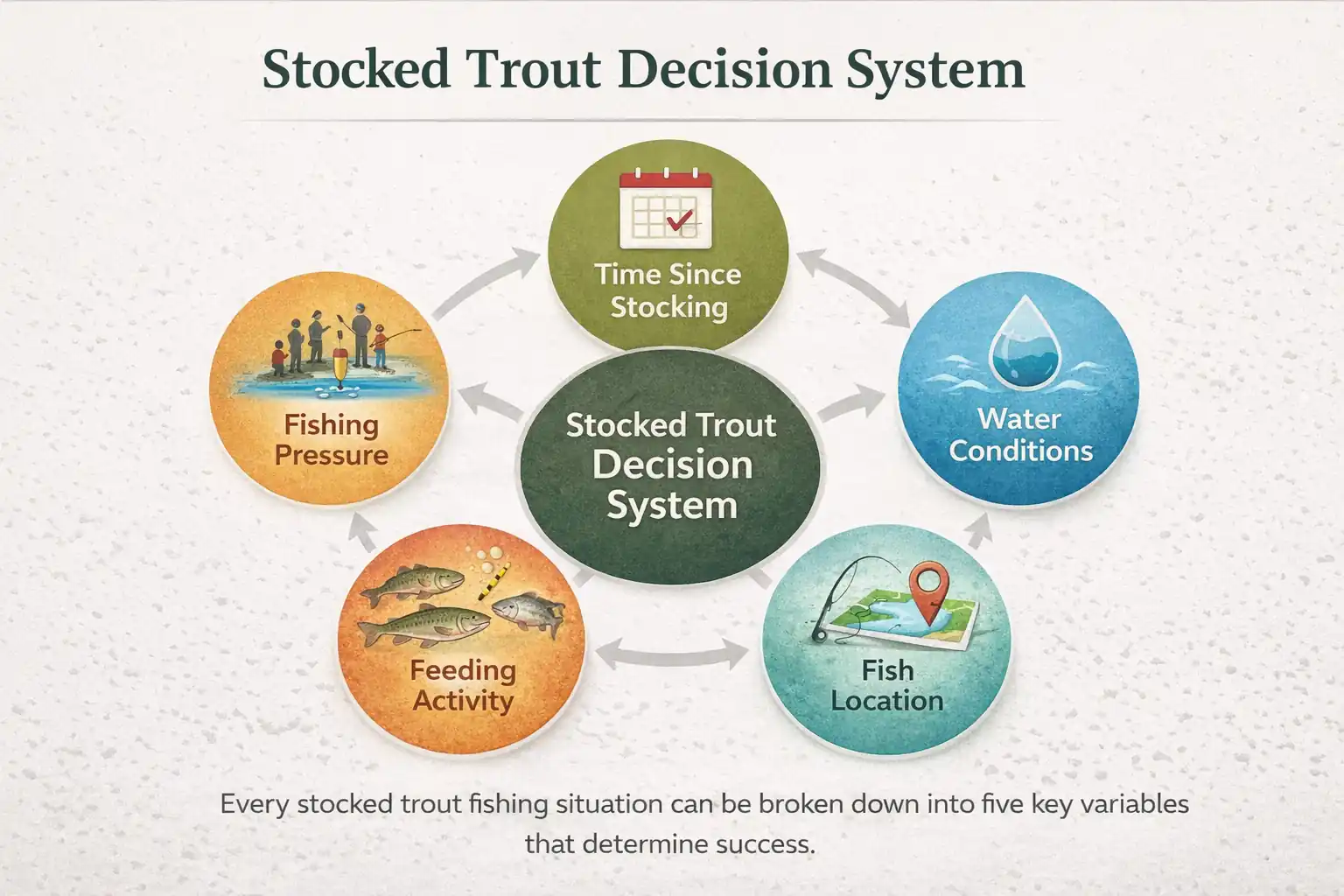
A condition-based five-variable framework for catching stocked trout consistently — time since stocking, water conditions, fish location, feeding activity, and fishing pressure evaluated in the correct priority order.
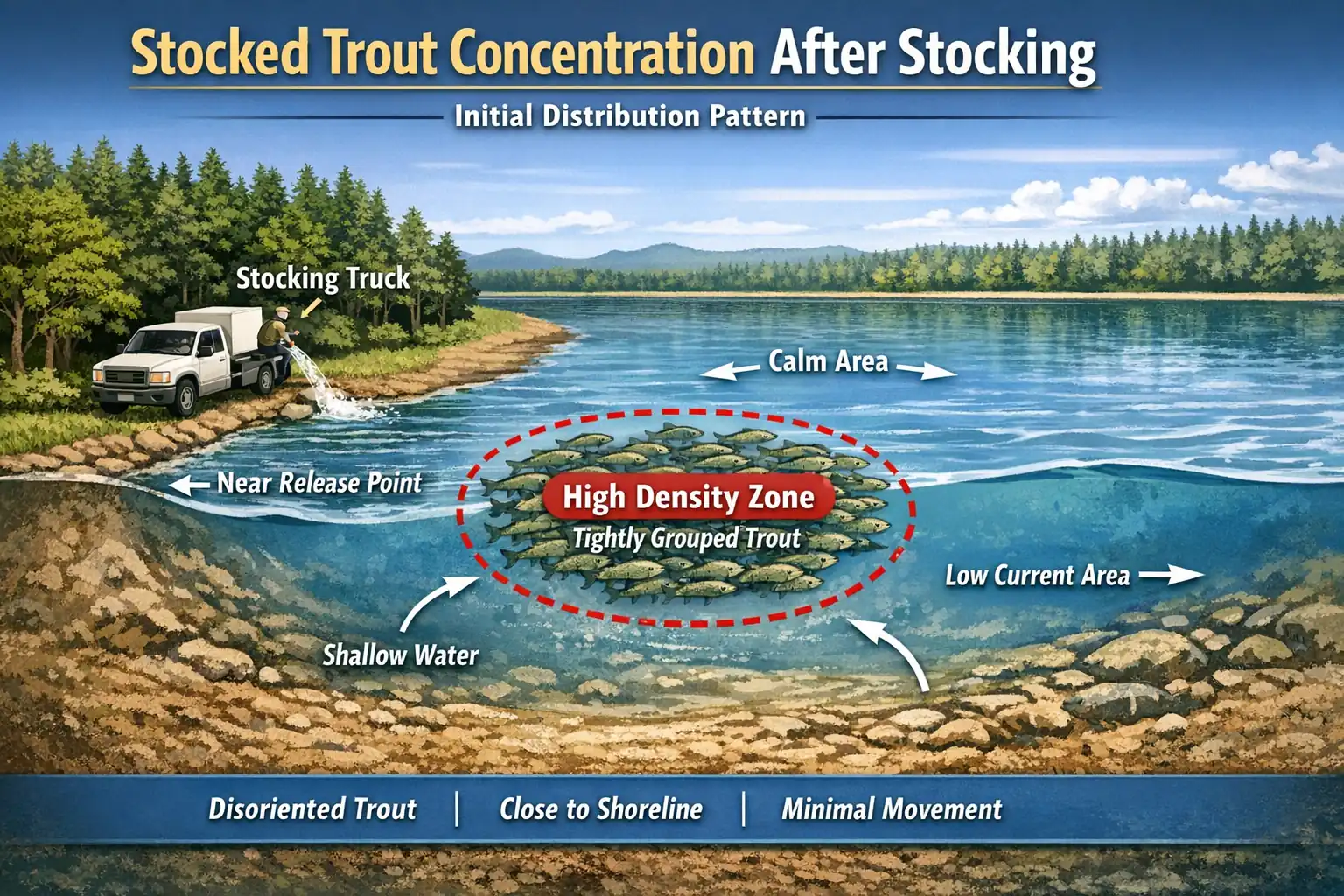
Stocked trout are location-dependent, not evenly distributed. A complete positioning guide covering stocking point effect, shoreline bias, depth control, holding vs cruising behavior, current positioning, and pressure-induced movement.
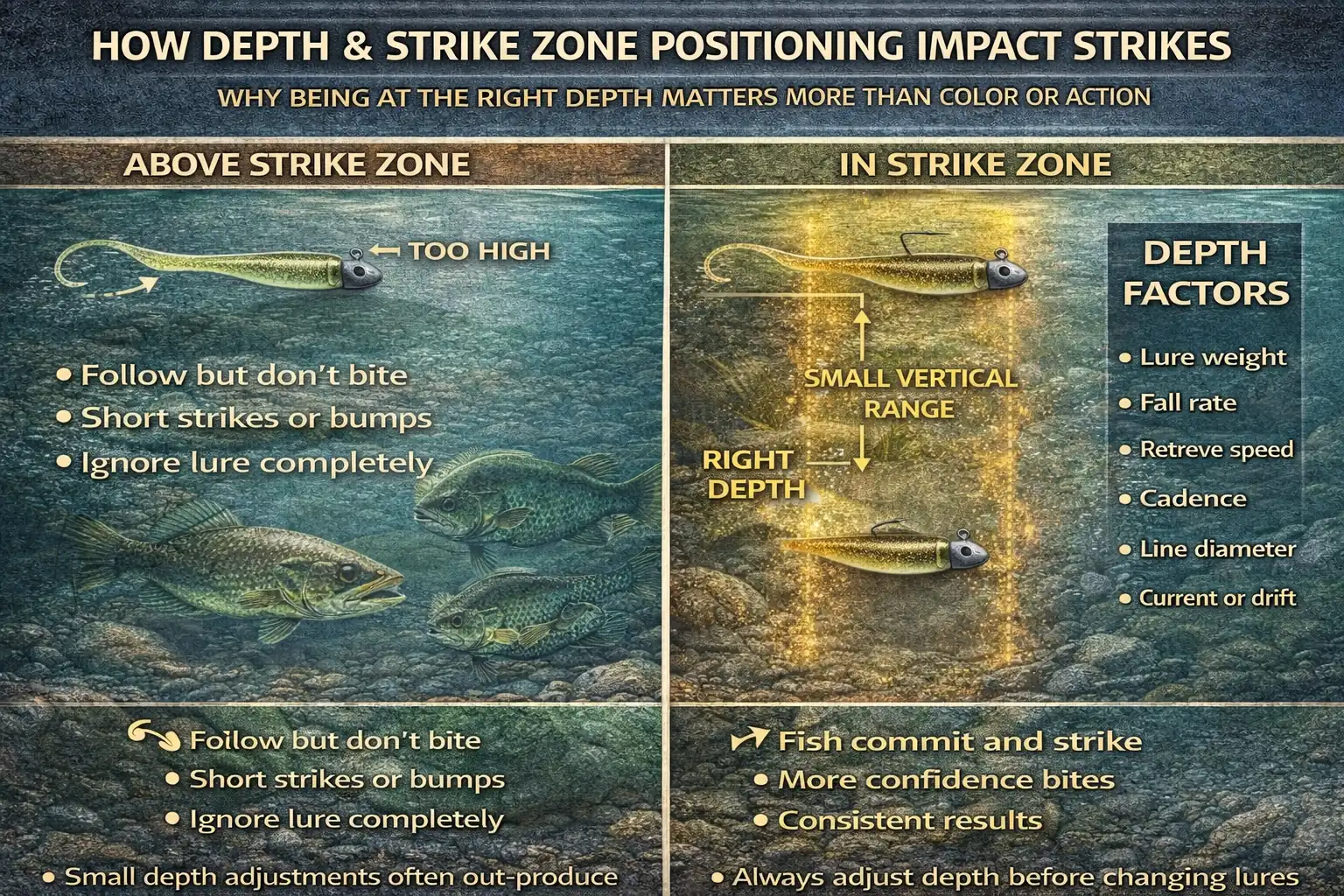
A perfect lure does nothing outside the strike zone. Depth control is the framework everything else is secondary — fish hold at specific depths and react within very narrow vertical windows.
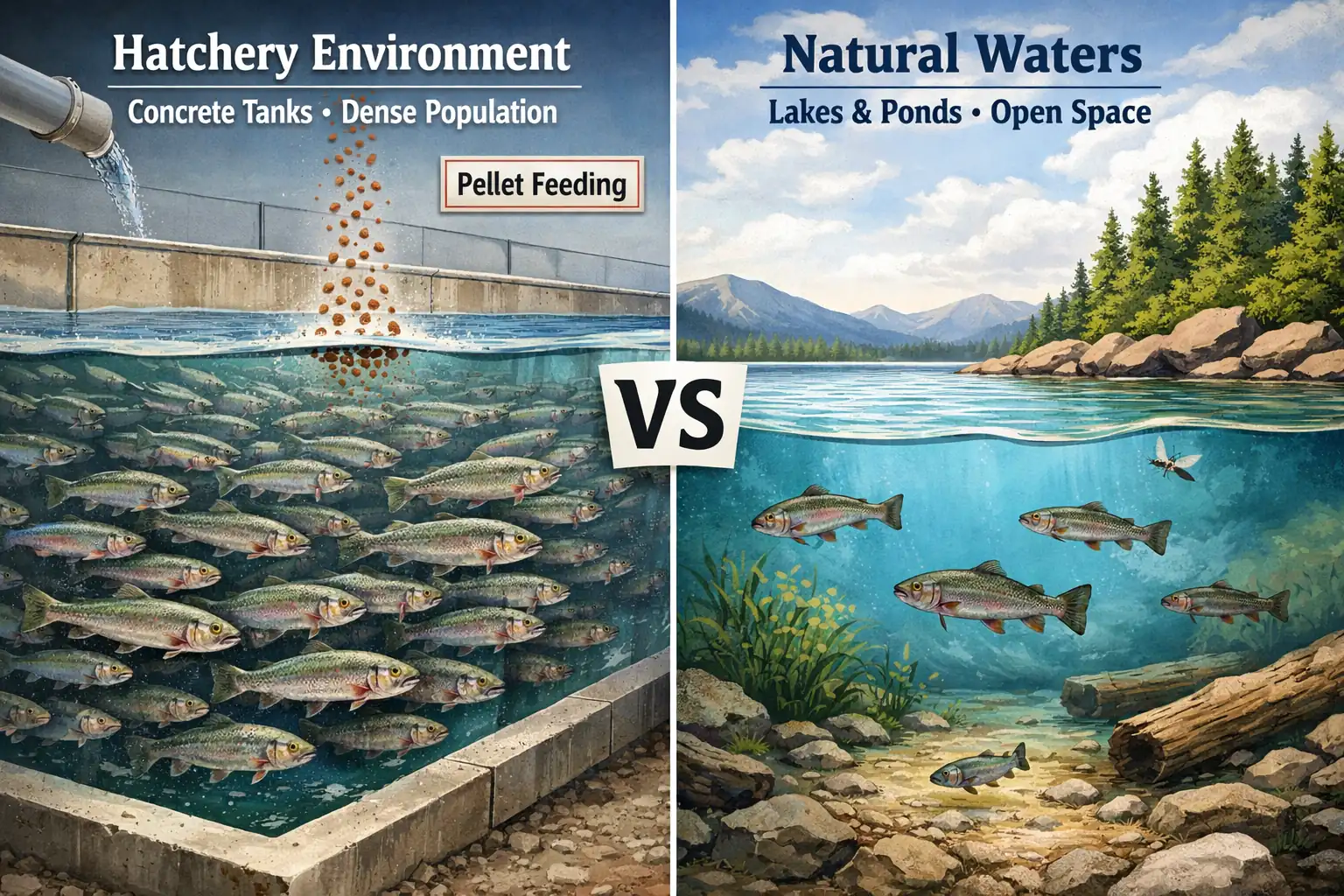
Catching stocked trout in the first 72 hours follows predictable patterns. A complete system covering location, depth, movement vs stillness, the transition phase, and behavior timeline for each stage after stocking.
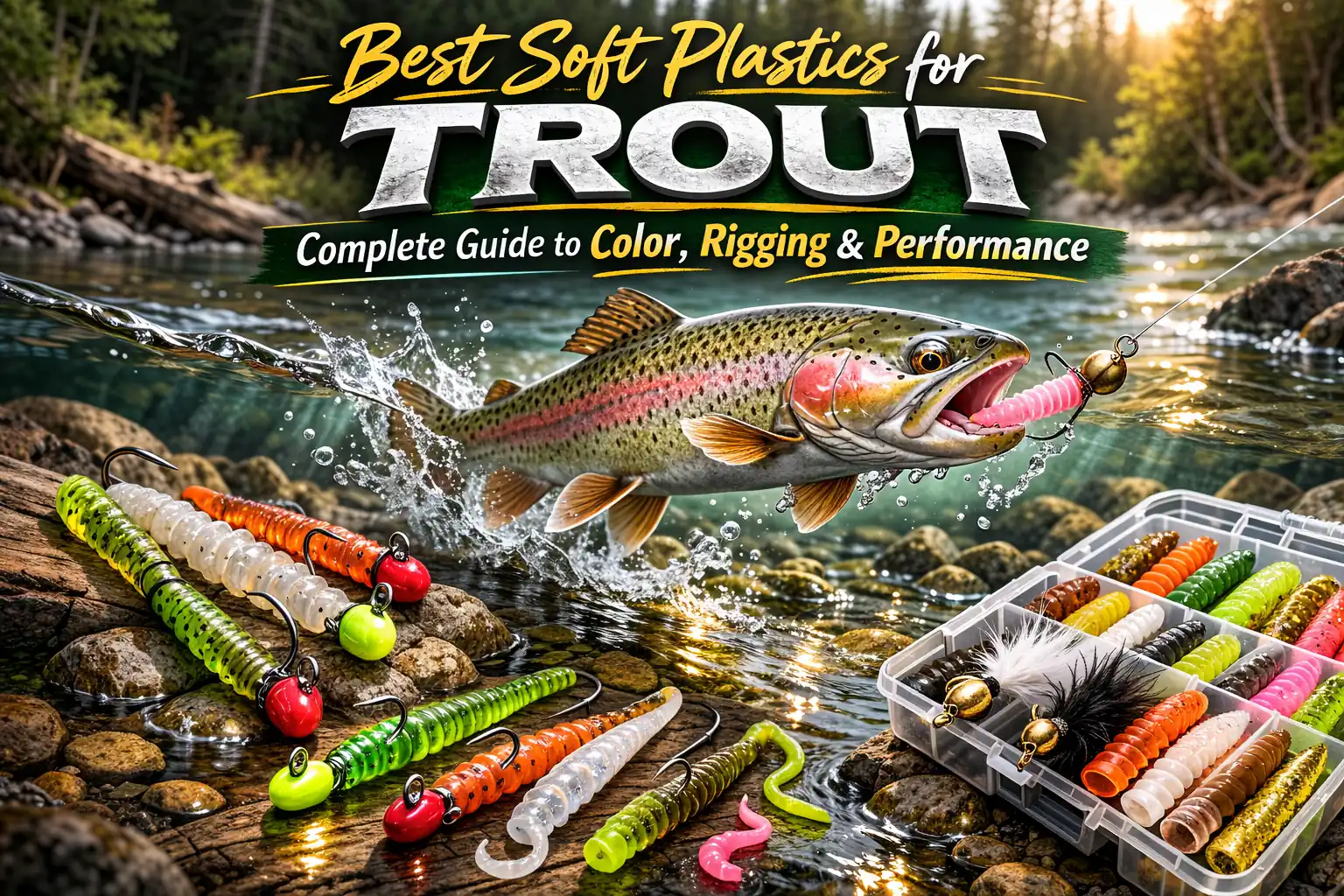
The central trout fishing resource on Family Fishin. Color visibility, fall rate control, material softness, jig head selection, rigging methods, seasonal adjustments — every trout guide connects back to this page.
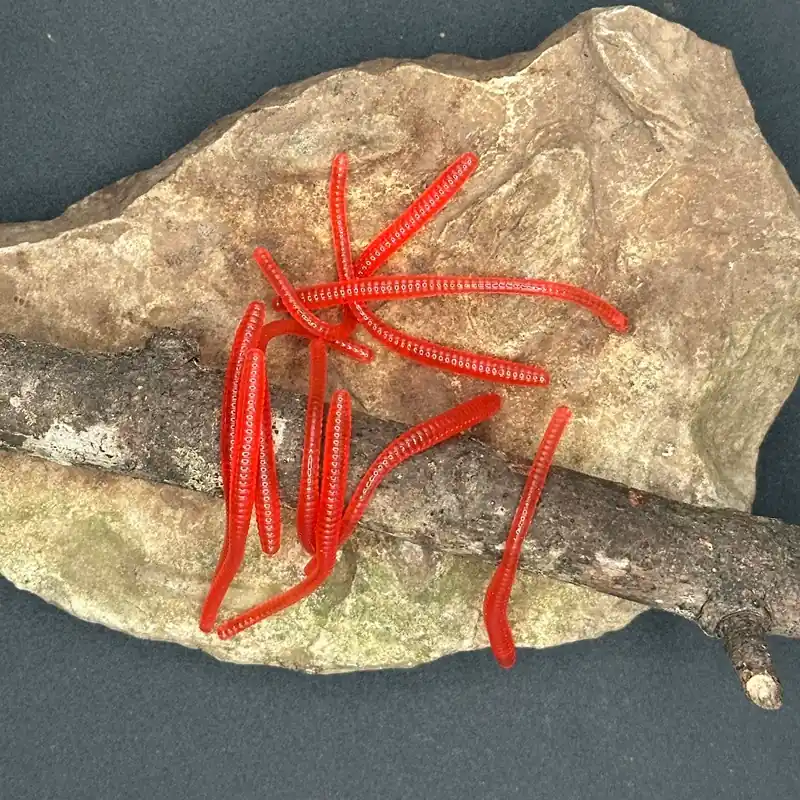
Three proven ways to rig a trout worm — the inline method, San Juan method, and wacky rig. Which to use when, and tips for getting better hookups on stocked trout.